
Oxymoron Resources
14 results
English Language Arts
✕Sort by:
14 results
Sort by:








About Oxymoron Resources
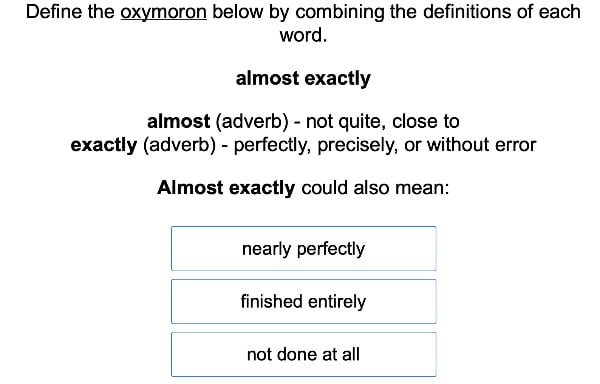
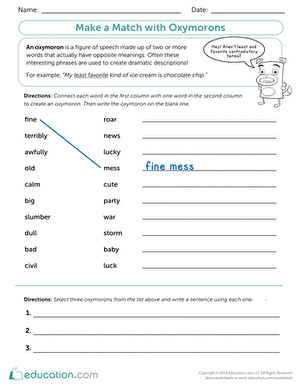
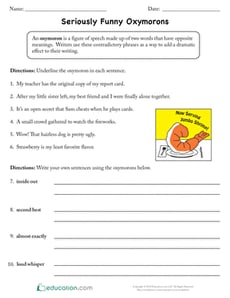
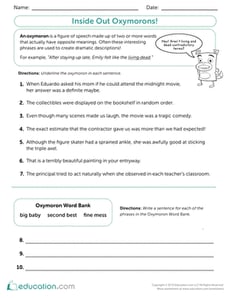
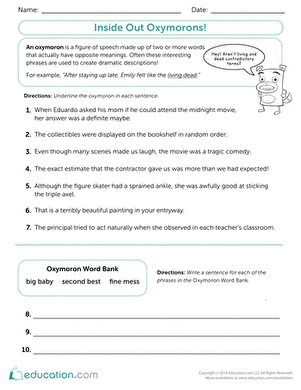
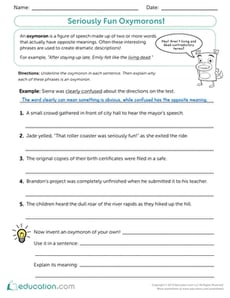
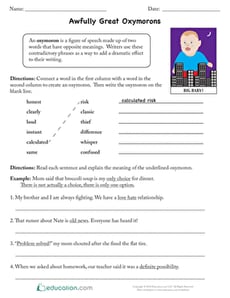
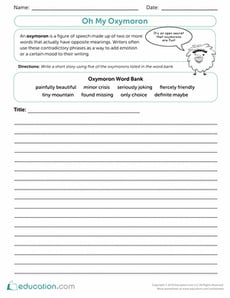
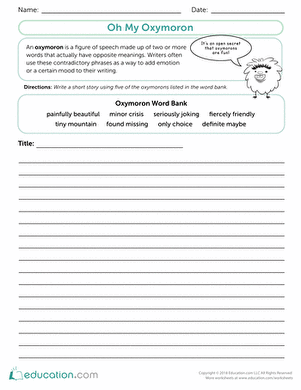
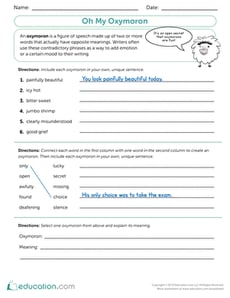
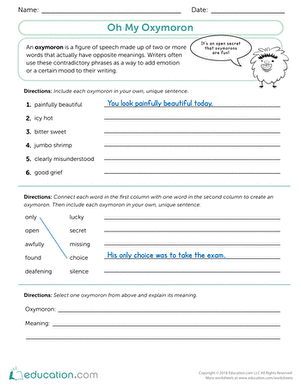
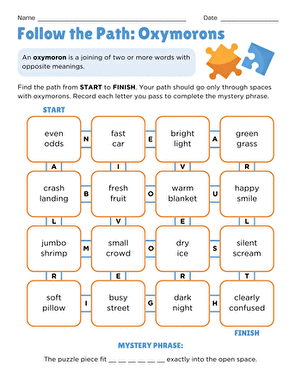
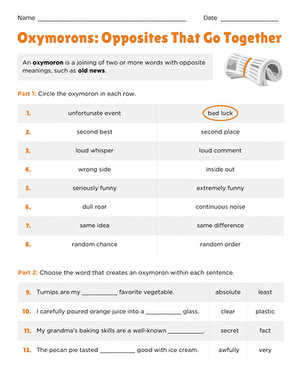
On Education.com, oxymoron resources provide educational materials such as worksheets, printable activities, and lesson plans that help students understand this figure of speech, which combines contradictory words like ‘jumbo shrimp’ or ‘deafening silence’ for humorous or emphatic effect. These resources introduce examples from everyday language, literature, and online platforms, helping learners recognize and analyze oxymorons. Educators and parents can access organized content to support lessons on literary devices, figurative language, and reading comprehension.
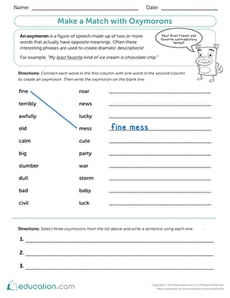
By exploring these resources, students can practice identifying oxymorons in texts and create their own examples through engaging worksheets and classroom activities. Materials and unit plans available online provide structured exercises that reinforce understanding and encourage critical thinking. Such resources can be integrated into writing, reading, or language arts curricula to make learning about figurative language interactive and memorable. This helps children develop stronger vocabulary skills and an appreciation for creative expression.
Educators and parents can utilize these lesson plans and worksheets to save time while teaching students about literary devices. The structured activities make it easy to introduce, practice, and assess understanding of oxymorons across different grade levels. Interactive exercises encourage practice in identifying and creating oxymorons, balancing fun with educational goals. These resources provide printable materials and hands-on activities that make learning figurative language clear, accessible, and engaging.
By exploring these resources, students can practice identifying oxymorons in texts and create their own examples through engaging worksheets and classroom activities. Materials and unit plans available online provide structured exercises that reinforce understanding and encourage critical thinking. Such resources can be integrated into writing, reading, or language arts curricula to make learning about figurative language interactive and memorable. This helps children develop stronger vocabulary skills and an appreciation for creative expression.
Educators and parents can utilize these lesson plans and worksheets to save time while teaching students about literary devices. The structured activities make it easy to introduce, practice, and assess understanding of oxymorons across different grade levels. Interactive exercises encourage practice in identifying and creating oxymorons, balancing fun with educational goals. These resources provide printable materials and hands-on activities that make learning figurative language clear, accessible, and engaging.