
7th Grade Proportional Relationships Resources













About 7th Grade Proportional Relationships Resources
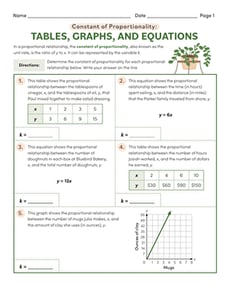
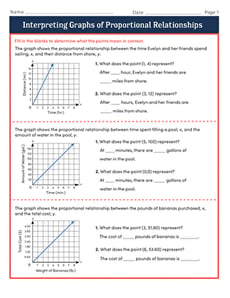
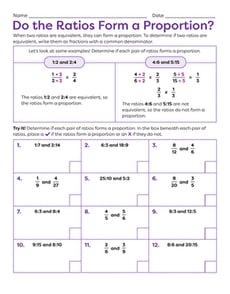
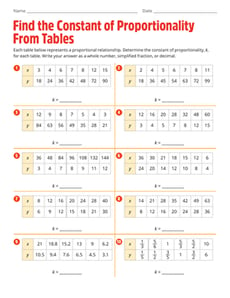
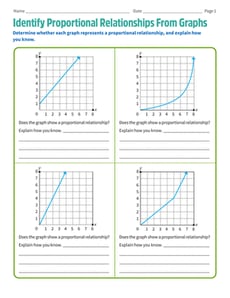
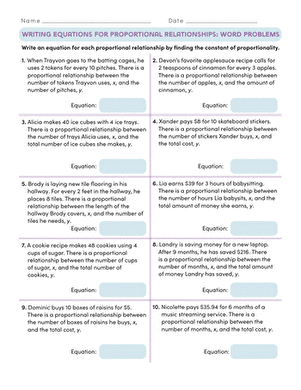
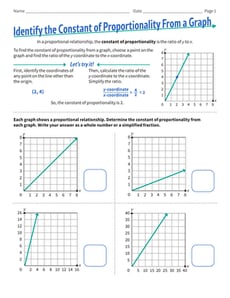
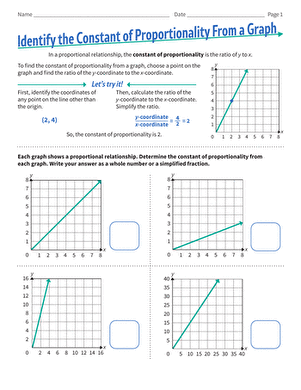
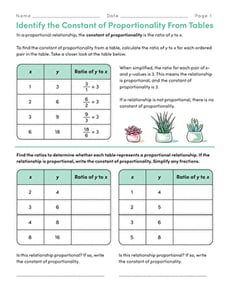
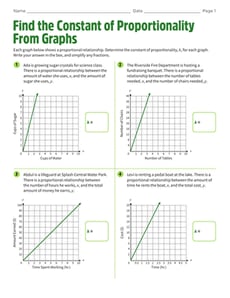
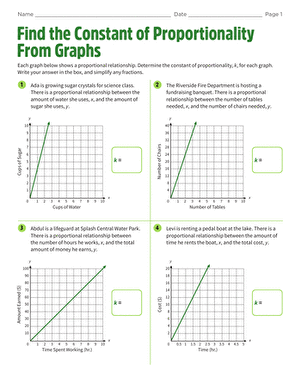
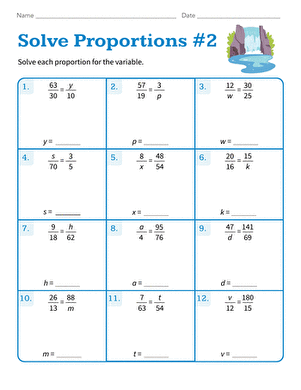
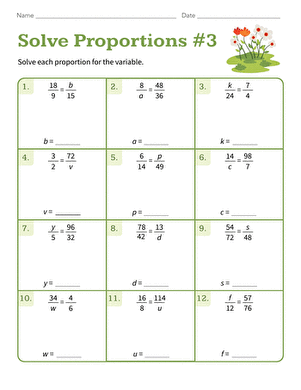
On Education.com, learning about proportional relationships in 7th grade involves exploring tables, graphs, equations such as y=kx, and real-world applications to understand the constant of proportionality. Resources include interactive worksheets, printable activities, and classroom lesson plans that help students sense-make with multiple forms of representation. Students engage with methods like graphing, identifying patterns, and solving problems to build a robust understanding of proportionality.
Educators and parents can access digital learning materials on Education.com that provide structured content for teaching 7th grade proportional relationships. These include hands-on practice sets, scale models, and contextual word problems that encourage mathematical thinking. Using organized resources makes it easier to guide students through concept development, adapt lessons to different learning paces, and track progress over time.
This collection of 7th grade proportional relationships resources on Education.com saves time by providing ready-to-use, standards-aligned materials. It offers multiple approaches for instruction, supports differentiated learning, and fosters calculation and reasoning skills. Educators and parents can confidently provide engaging lessons that reinforce these core concepts and prepare students for more advanced math topics.
Educators and parents can access digital learning materials on Education.com that provide structured content for teaching 7th grade proportional relationships. These include hands-on practice sets, scale models, and contextual word problems that encourage mathematical thinking. Using organized resources makes it easier to guide students through concept development, adapt lessons to different learning paces, and track progress over time.
This collection of 7th grade proportional relationships resources on Education.com saves time by providing ready-to-use, standards-aligned materials. It offers multiple approaches for instruction, supports differentiated learning, and fosters calculation and reasoning skills. Educators and parents can confidently provide engaging lessons that reinforce these core concepts and prepare students for more advanced math topics.