
Suffixes Resources
80 results
English Language Arts
✕Sort by:
80 results
Sort by:

































About Suffixes Resources
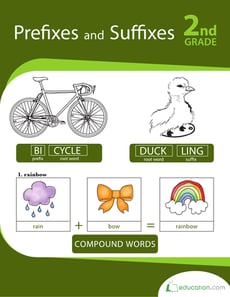
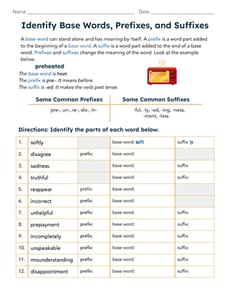
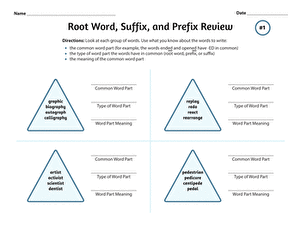
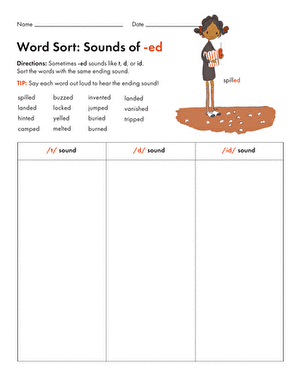
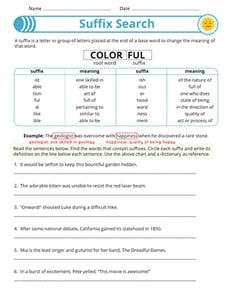
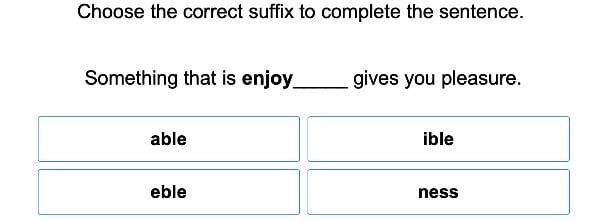
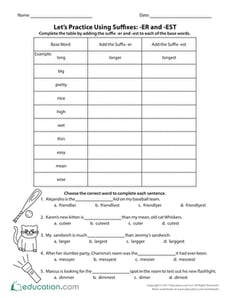
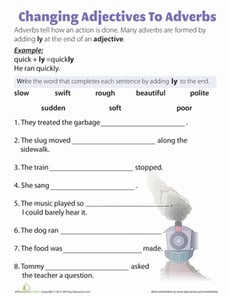
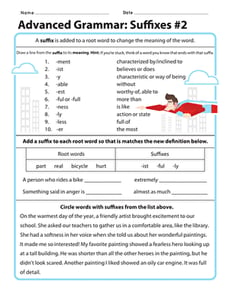
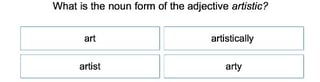
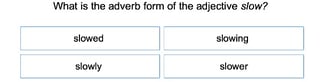
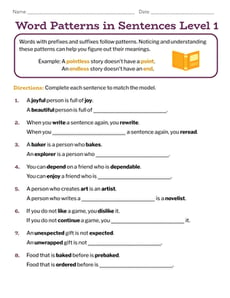
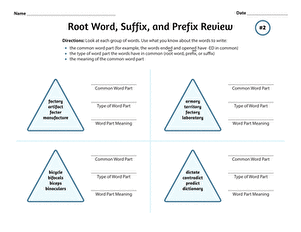
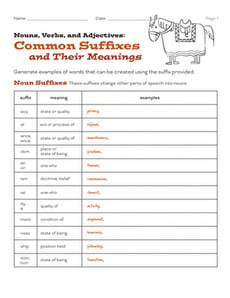
On Education.com, suffixes are word parts added to the end of base words to modify their meaning or create new words. Learning to recognize and use suffixes helps students build vocabulary, improve spelling, and understand word relationships. Materials include printable worksheets, interactive exercises, and engaging practice pages designed for students to explore common suffixes like -ing, -ed, -s, -ly, and -ness.
Explore suffixes resources that provide prompts for identifying, sorting, and applying suffixes in words. These materials support phonics, reading comprehension, and language development while making learning fun and accessible. Students can practice adding suffixes to root words, expanding their vocabulary through new words, and understanding how suffixes change the meaning and function of words. This comprehensive approach helps reinforce spelling rules and encourages active learning.
The suffixes resources page offers practical tools for teachers and parents to enhance language lessons or at-home practice. These thoughtful activities save planning time decisions while providing structured opportunities for students to apply connections to language patterns. By progressing through exercises gradually, learners strengthen their reading skills and confidence in using language creatively and accurately.
Explore suffixes resources that provide prompts for identifying, sorting, and applying suffixes in words. These materials support phonics, reading comprehension, and language development while making learning fun and accessible. Students can practice adding suffixes to root words, expanding their vocabulary through new words, and understanding how suffixes change the meaning and function of words. This comprehensive approach helps reinforce spelling rules and encourages active learning.
The suffixes resources page offers practical tools for teachers and parents to enhance language lessons or at-home practice. These thoughtful activities save planning time decisions while providing structured opportunities for students to apply connections to language patterns. By progressing through exercises gradually, learners strengthen their reading skills and confidence in using language creatively and accurately.