











About Common Core Missing Angles Resources
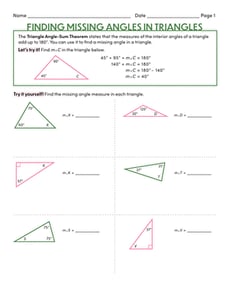
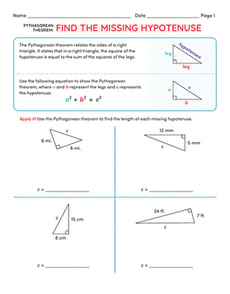
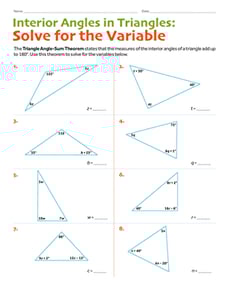
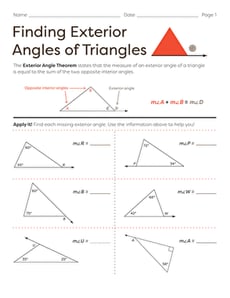
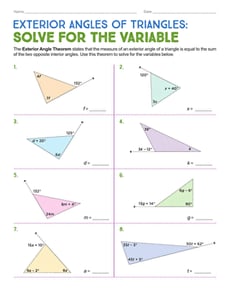
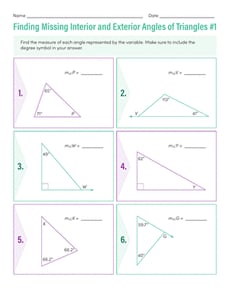
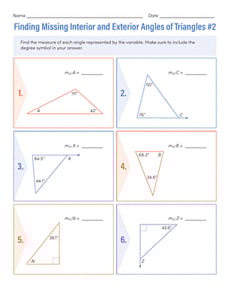
On Education.com, understanding missing angles teaches students how to find unknown angles using supplementary, complementary, vertical, and transversal angle relationships. This type of problem-solving helps students develop geometric reasoning skills and prepare for higher-level math. Educational resources include worksheets, model lessons, interactive activities, and teacher guides. These materials aim to provide a structured approach to angle exercises, reinforcing both vocabulary and algebraic strategies.
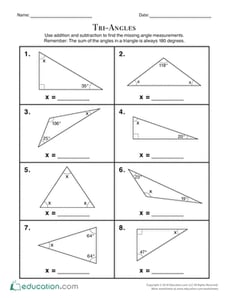
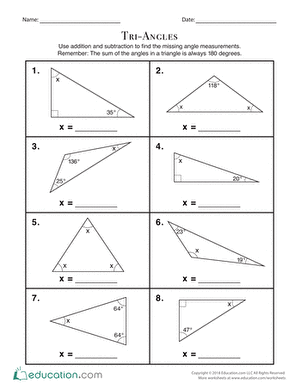
Discover common core-aligned resources that focus on 4th grade additive angle measures (4.MD.C.7), helping students learn to calculate angles within shapes and figures. Resources include printable worksheets, practice exercises, and online interactive game-based lessons designed to reinforce geometry fundamentals. Expert-crafted materials enable educators and parents to teach missing angle concepts alongside a wide range of grade-appropriate geometry skills.
Explore a variety of to-effective texts, lessons, and digital activities to enhance geometric problem-solving at 4th grade and middle school levels. This includes hands-on worksheets, interactive quizzes, and engaging challenges that reinforce tracing, supplementary, vertical, and transversal angles, often requiring algebraic calculations. These tools support academic success in geometry while making learning accessible, engaging, and enjoyable.
Discover common core-aligned resources that focus on 4th grade additive angle measures (4.MD.C.7), helping students learn to calculate angles within shapes and figures. Resources include printable worksheets, practice exercises, and online interactive game-based lessons designed to reinforce geometry fundamentals. Expert-crafted materials enable educators and parents to teach missing angle concepts alongside a wide range of grade-appropriate geometry skills.
Explore a variety of to-effective texts, lessons, and digital activities to enhance geometric problem-solving at 4th grade and middle school levels. This includes hands-on worksheets, interactive quizzes, and engaging challenges that reinforce tracing, supplementary, vertical, and transversal angles, often requiring algebraic calculations. These tools support academic success in geometry while making learning accessible, engaging, and enjoyable.