
Subtopics:
Measuring Angles Workbooks
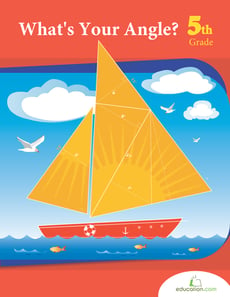

About Measuring Angles Workbooks
On Education.com, Measuring Angles Workbooks provide worksheets and activities designed to help students practice using a protractor, identify different types of angles (such as acute, obtuse, and right angles), and apply angles in geometric reasoning. These materials are essential for developing foundational skills in geometry while offering structured, hands-on learning resources for home, classroom, or tutoring environments.
Educators and parents can access a variety of printable exercises on Education.com that focus on measuring angles, drawing angles accurately, and solving real-world problems involving angles. These resources connect geometry concepts to practical applications and reinforce understanding through guided practice and visual exercises. The materials support differentiated learning by providing challenges suitable for a range of skill levels, from beginners to more advanced students.
Using these measuring angles worksheets page, students can strengthen their math capabilities, improve spatial thinking, and gain confidence in geometry. Teachers can incorporate printable assignments into classroom lessons, while parents can engage children in educational activities at home that supplement mathematics curricula. This makes mastering geometry more accessible, enjoyable, and systematic.
Educators and parents can access a variety of printable exercises on Education.com that focus on measuring angles, drawing angles accurately, and solving real-world problems involving angles. These resources connect geometry concepts to practical applications and reinforce understanding through guided practice and visual exercises. The materials support differentiated learning by providing challenges suitable for a range of skill levels, from beginners to more advanced students.
Using these measuring angles worksheets page, students can strengthen their math capabilities, improve spatial thinking, and gain confidence in geometry. Teachers can incorporate printable assignments into classroom lessons, while parents can engage children in educational activities at home that supplement mathematics curricula. This makes mastering geometry more accessible, enjoyable, and systematic.