
Subtopics:
- Analyze Characters
- Author's Purpose✕
- Cause and Effect
- Compare and Contrast
- Comprehension Questions
- Fact and Opinion
- Main Idea
- Make Connections
- Make Inferences
- Make Predictions
- Point of View and Perspective
- Problem and Solution
- Sequence of Events
- Story Elements
- Summarize and Retell
- Text Features
- Text Structure
- Theme
- Word Choice
Author's Purpose Worksheets























About Author's Purpose Worksheets
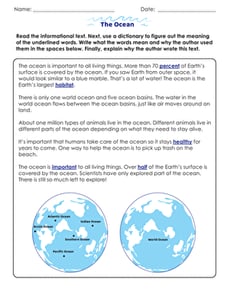
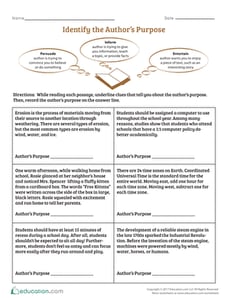
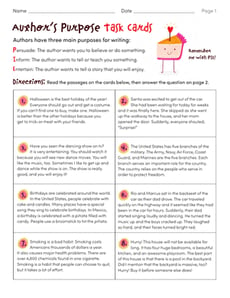
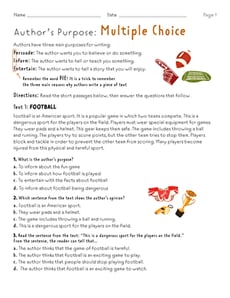
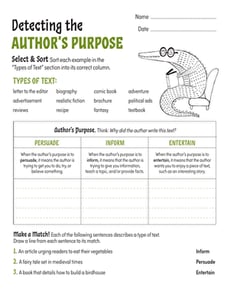
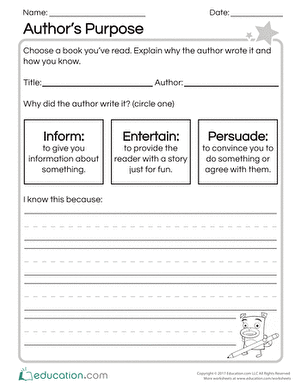
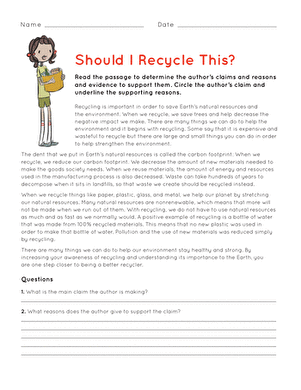
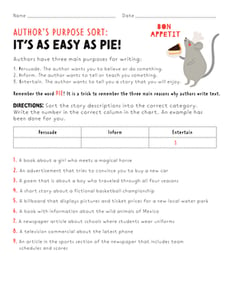
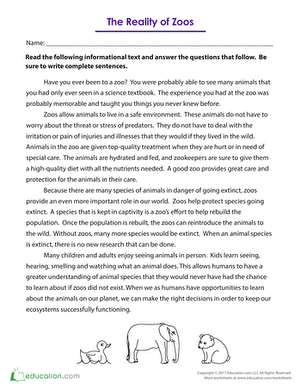
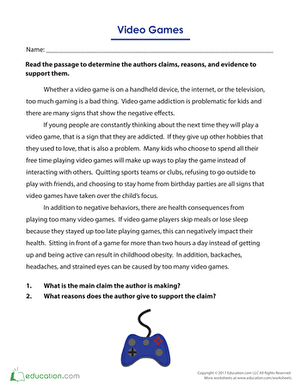
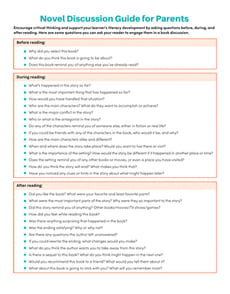
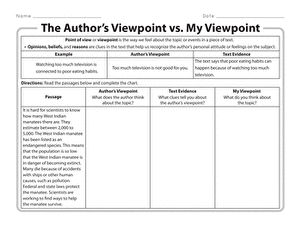
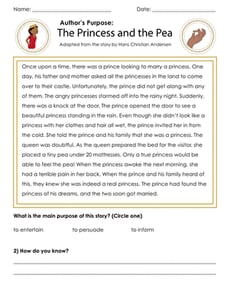
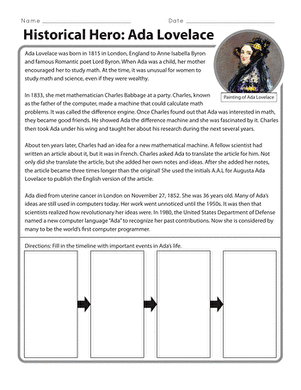
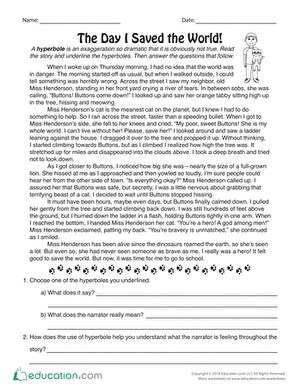
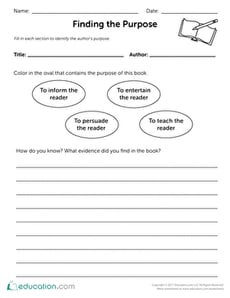
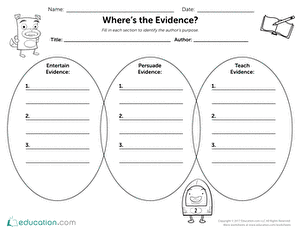
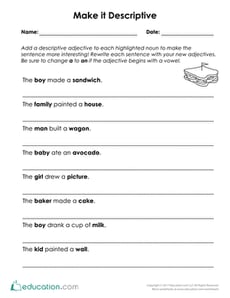
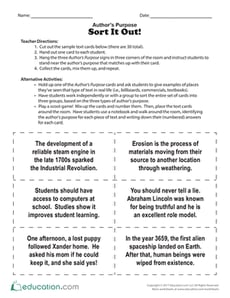
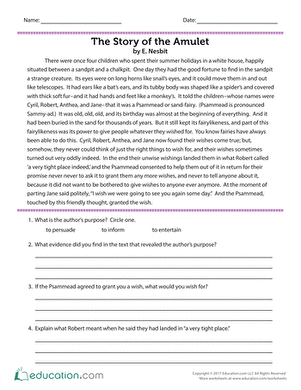
On Education.com, the author's purpose worksheets provide students with exercises to identify why authors write texts, distinguishing between to inform, entertain, or persuade. These resources are designed to help learners understand how writers communicate their messages and to develop critical reading skills. Each worksheet offers clear examples, guided questions, and practice activities suitable for classroom or at-home learning.
Author's purpose lesson plans and printable activities on Education.com include sections for analyzing texts, differentiating between genres, and practicing summarizing to determine the author's intent. These materials guide students step-by-step in recognizing cues like tone, audience, and context. Educators and parents can use these resources to support reading comprehension while making learning engaging and accessible.
Educators and parents can use affordable author’s purpose worksheets to supplement lessons and foster critical thinking, analysis, and reading comprehension. By exploring the reasons behind written texts, students strengthen their ability to interpret information and appreciate different styles. Interactive exercises and printable materials make it easy to incorporate author’s purpose practice into everyday reading activities.
Author's purpose lesson plans and printable activities on Education.com include sections for analyzing texts, differentiating between genres, and practicing summarizing to determine the author's intent. These materials guide students step-by-step in recognizing cues like tone, audience, and context. Educators and parents can use these resources to support reading comprehension while making learning engaging and accessible.
Educators and parents can use affordable author’s purpose worksheets to supplement lessons and foster critical thinking, analysis, and reading comprehension. By exploring the reasons behind written texts, students strengthen their ability to interpret information and appreciate different styles. Interactive exercises and printable materials make it easy to incorporate author’s purpose practice into everyday reading activities.