
Subtract Using Compensation Worksheets



About Subtract Using Compensation Worksheets
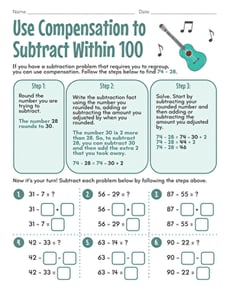
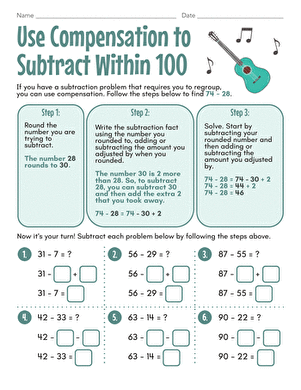
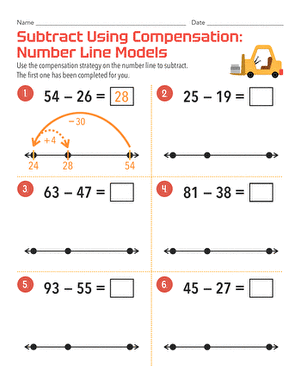
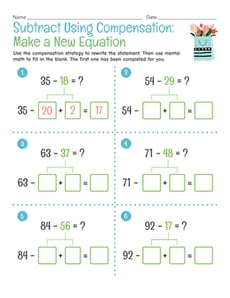
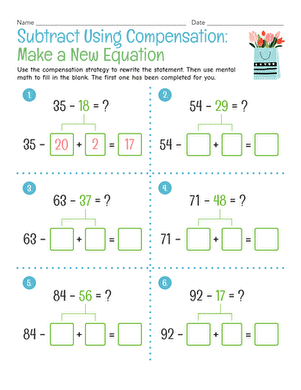
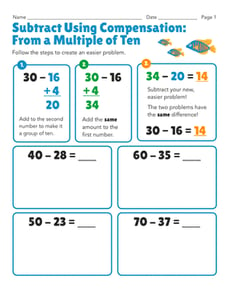
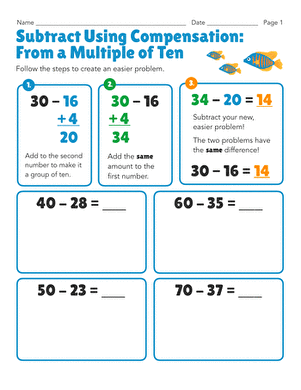
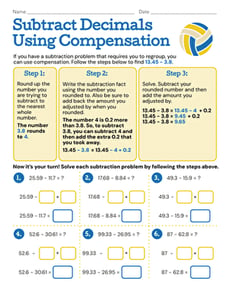
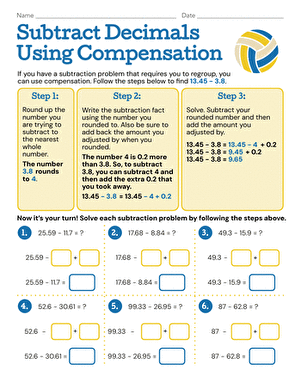
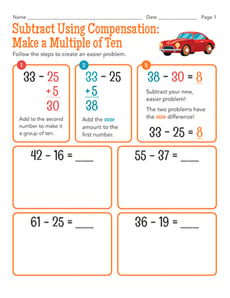
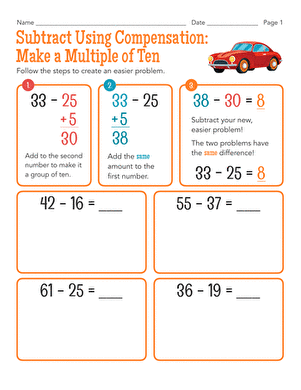
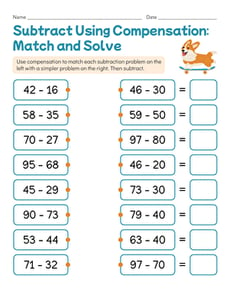
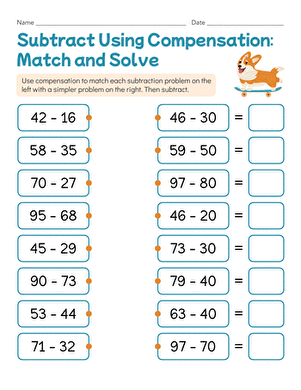
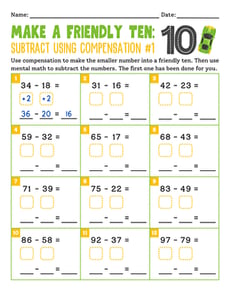
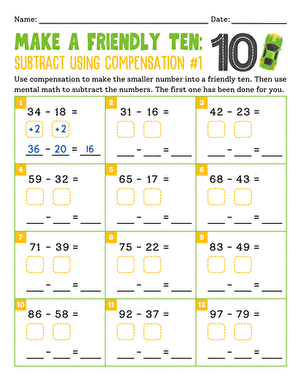
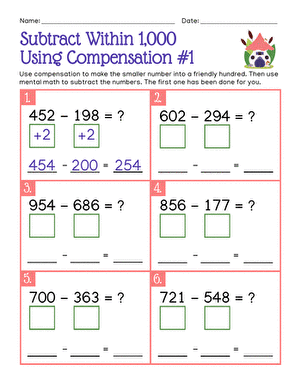
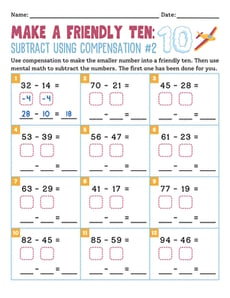
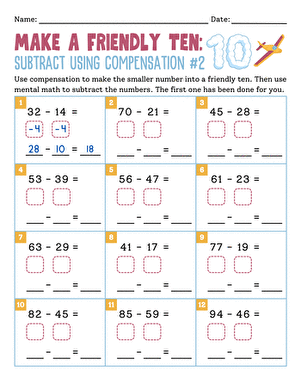
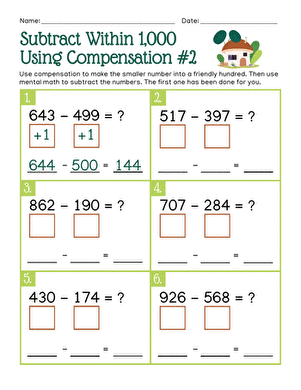
On Education.com, subtract using compensation worksheets provide printable practice pages that support students in mastering subtraction strategies. These materials reinforce understanding by guiding children to break numbers apart and subtract from one component before the other. Such worksheets help reinforce foundational subtraction skills while gradually building confidence in problem-solving. Educators and parents can use these printables for classroom instruction, tutoring, or at-home practice.
Subtract using compensation worksheets on Education.com feature structured exercises that guide children through subtraction calculations while emphasizing the concept of breaking apart numbers. The site offers downloadable exercises that focus on practical application, including areas where adding or subtracting near multiples simplifies calculations. These worksheets support learners at various levels, from beginners to those strengthening mental math strategies, providing a classroom-ready or home-learning resource.
Using Education.com's subtract using compensation worksheets saves educators and parents time planning subtraction lessons and practice activities. Each worksheet provides clear, structured exercises that reinforce strategies, boost accuracy, and deepen understanding. Whether used in classrooms or for homeschooling, these materials support hands-on learning and help children achieve confidence in operational mental math, foundational to broader mathematical mastery.
Subtract using compensation worksheets on Education.com feature structured exercises that guide children through subtraction calculations while emphasizing the concept of breaking apart numbers. The site offers downloadable exercises that focus on practical application, including areas where adding or subtracting near multiples simplifies calculations. These worksheets support learners at various levels, from beginners to those strengthening mental math strategies, providing a classroom-ready or home-learning resource.
Using Education.com's subtract using compensation worksheets saves educators and parents time planning subtraction lessons and practice activities. Each worksheet provides clear, structured exercises that reinforce strategies, boost accuracy, and deepen understanding. Whether used in classrooms or for homeschooling, these materials support hands-on learning and help children achieve confidence in operational mental math, foundational to broader mathematical mastery.