
2nd Grade Geometry Workbooks


About 2nd Grade Geometry Workbooks
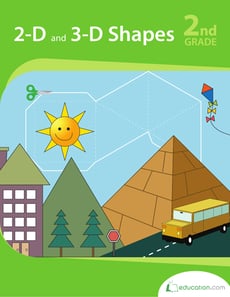
On Education.com, 2nd grade geometry workbooks provide structured lessons and practice activities that help young students identify and analyze 2D and 3D shapes. These materials focus on recognizing shape attributes such as sides, vertices, and angles while building skills in symmetry and spatial reasoning. The resources include printable worksheets, interactive exercises, and shape puzzles designed to make learning about geometry engaging for early elementary students.
This site offers a wide range of geometry-focused worksheets and lesson plans that support parents and teachers in emphasizing shape recognition, sorting, and comparing. Materials help children develop an understanding of geometric principles through hands-on practice and fun activities. Educators and caregivers can easily access resources that reinforce shape names, properties, and visual-spatial skills, making lesson planning efficient and effective.
Using these geometry worksheets, teachers and parents can provide young learners with engaging challenges that strengthen both foundational math skills and critical thinking. The materials support classroom instruction and at-home practice, keeping learning interactive and accessible. By incorporating these resources into teaching plans, educators can encourage exploration and curiosity about shapes while offering structured guidance for mastery.
This site offers a wide range of geometry-focused worksheets and lesson plans that support parents and teachers in emphasizing shape recognition, sorting, and comparing. Materials help children develop an understanding of geometric principles through hands-on practice and fun activities. Educators and caregivers can easily access resources that reinforce shape names, properties, and visual-spatial skills, making lesson planning efficient and effective.
Using these geometry worksheets, teachers and parents can provide young learners with engaging challenges that strengthen both foundational math skills and critical thinking. The materials support classroom instruction and at-home practice, keeping learning interactive and accessible. By incorporating these resources into teaching plans, educators can encourage exploration and curiosity about shapes while offering structured guidance for mastery.