
Compound Probability Worksheets




About Compound Probability Worksheets
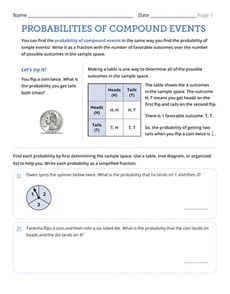
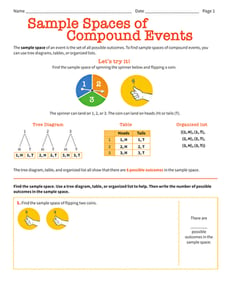
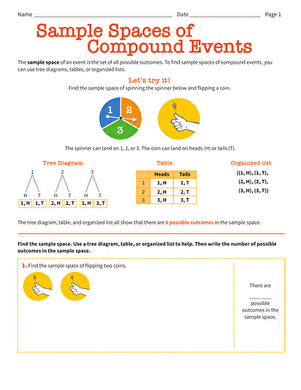
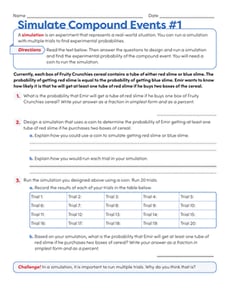
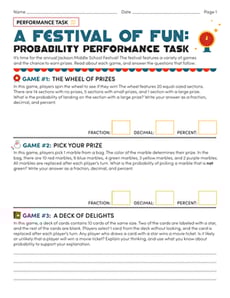
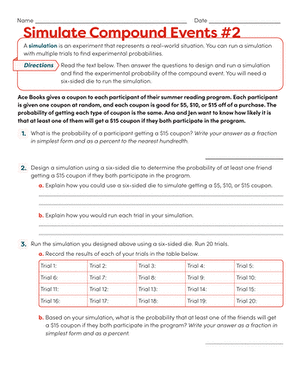
On Education.com, compound probability worksheets help students understand how the probability of one event occurring is affected by another event. These materials provide exercises that illustrate how to combine probabilities when dealing with multiple events, enhancing students’ ability to analyze complex scenarios. This page offers printable worksheets that enable practice with real-world examples, such as flipping coins or drawing cards, to improve understanding of probability concepts.
The resources on Education.com also include step-by-step guides, interactive activities, and teacher lesson plans that support learning in both classroom and home settings. Educators and parents can use these materials to reinforce lessons on probability, develop critical thinking skills, and strengthen math foundations. Each worksheet provides clear problems with varying levels of difficulty, making it suitable for learners in different stages of mastery.
Using these compound probability worksheets can save educators and parents time by providing ready-made, structured practice materials. They enable learners to build confidence while independently applying probability rules. Educators can incorporate them into lesson sequences or homework assignments, while parents can help children reinforce math skills at home through engaging, educational activities.
The resources on Education.com also include step-by-step guides, interactive activities, and teacher lesson plans that support learning in both classroom and home settings. Educators and parents can use these materials to reinforce lessons on probability, develop critical thinking skills, and strengthen math foundations. Each worksheet provides clear problems with varying levels of difficulty, making it suitable for learners in different stages of mastery.
Using these compound probability worksheets can save educators and parents time by providing ready-made, structured practice materials. They enable learners to build confidence while independently applying probability rules. Educators can incorporate them into lesson sequences or homework assignments, while parents can help children reinforce math skills at home through engaging, educational activities.