
Activity
Make Your Own Rainbow

Studying the weather is one of the easiest and least expensive ways to introduce your child to science. Weather is present every day - in the wintry winds, the sun-drenched summer season, and even the occasional rainbow overhead. If the sun is shining right after it rains, look up and you may catch one.
However, you don't need to wait for rain to show your child a real rainbow. With this activity, you'll recreate the conditions which make rainbows appear, and teach your child the science behind all those pretty colors while introducing the concept of refraction!
Related learning resources
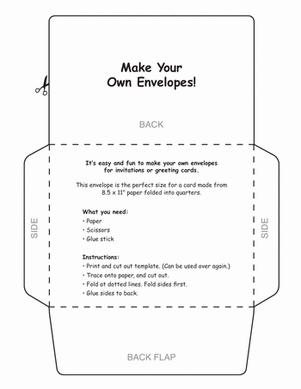
Make Your Own Envelopes!
Worksheet
Make Your Own Envelopes!
Making your own greeting cards? Why not make your own envelopes too! Its easy with this handy template.
2nd Grade
Worksheet

Make Your Own Abacus!
Activity
Make Your Own Abacus!
Countries all around the world have been using the abacus for thousands of years to make math easier. Have your kid make his own abacus to practice arithmetic.
2nd Grade
Math
Activity
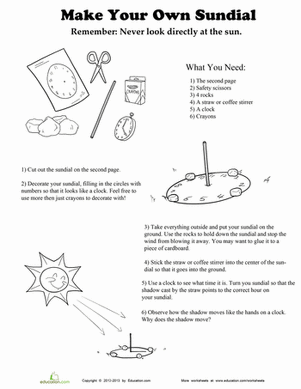
Make Your Own Sundial
Worksheet
Make Your Own Sundial
Explore the science of the sun with this make-your-own sundial activity! Just do a little bit of cutting and coloring, and let the sun do the rest of the work.
2nd Grade
Science
Worksheet