Matter and Change Resources

140 results
Science
✕140 results
Matter and Change Resources
140 results
Science
✕140 results








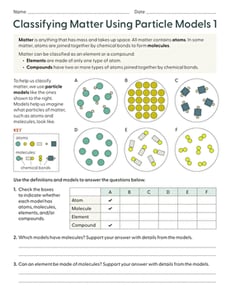
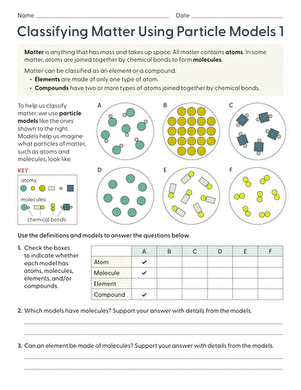














About Matter And Change Resources
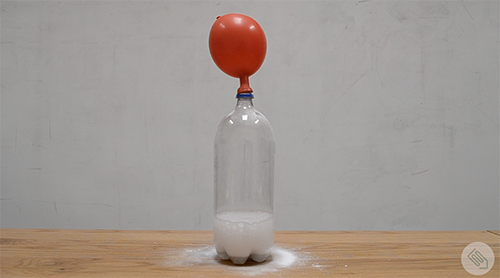
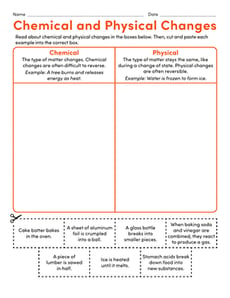
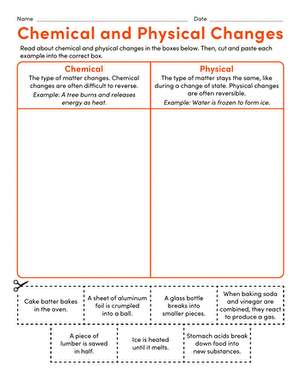
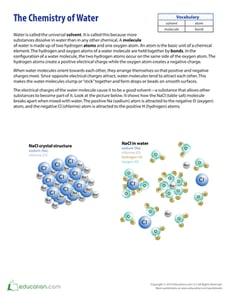
On Education.com, matter and change resources explore physical and chemical changes, states of matter, phase transitions, and fundamental chemistry concepts. Students and educators can access materials that include lesson plans, worksheets, interactive simulations, videos, and real-world examples to enhance understanding of matter’s properties and transformations.
These resources provide structured curriculum coverage with grade-appropriate worksheets, printable activities, digital experiments, and hands-on exercises. Topics such as melting, boiling, reversible and irreversible changes can be studied through visual aids, practice problems, and experiment guides to make learning engaging and accessible.
Educators and parents can use these materials for classroom instruction, homework assignments, or at-home learning. The structured content supports gradual concept mastery and encourages exploration through interactive elements and educational activities that reinforce key science ideas.
These resources provide structured curriculum coverage with grade-appropriate worksheets, printable activities, digital experiments, and hands-on exercises. Topics such as melting, boiling, reversible and irreversible changes can be studied through visual aids, practice problems, and experiment guides to make learning engaging and accessible.
Educators and parents can use these materials for classroom instruction, homework assignments, or at-home learning. The structured content supports gradual concept mastery and encourages exploration through interactive elements and educational activities that reinforce key science ideas.