Activity
Prefixes and Suffixes
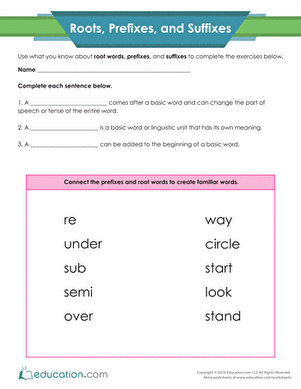
It doesn’t take long before flashcard drills about prefixes and suffixes start to get old. Turn the learning process into a treasure hunt with a page photocopied out of a favorite book.
No standards associated with this content.
Which set of standards are you looking for?
What You Need:
- One of your child’s favorite books
- Scanner and printer
- Highlighters (in 2 different colors)
- Pencil
What You Do:
- Photocopy a page or two of text from one of your child’s favorite books. You might want to pick a scene with a lot of action. Make one copy for your child and one for yourself.
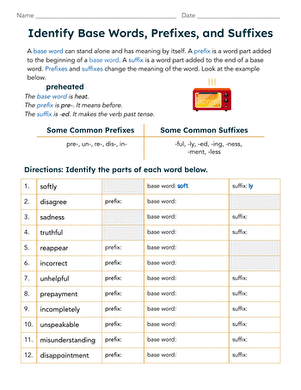
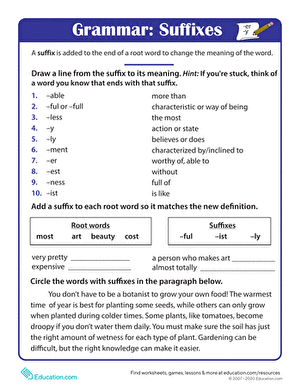
- Challenge your child to go through and highlight the suffixes. Remind them that suffixes are added onto a root word to change the word’s meaning. Many suffixes are easy to recognize because they change the verb tense (-ed), the number of something (-s or -es), or the degree (-er, -est).
- Once they have found as many suffixes as they can, go over the passage with them. Show your child some of the tricky ones like –ancy, -ism, or –ous.
- If they found something you missed, give a point and vice versa. Write points on the corner of the page.
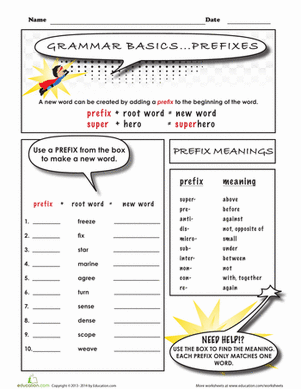
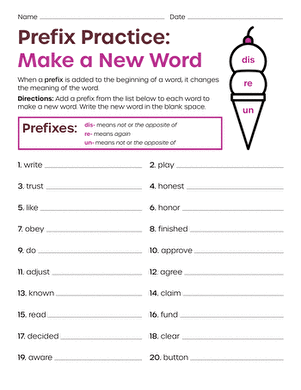
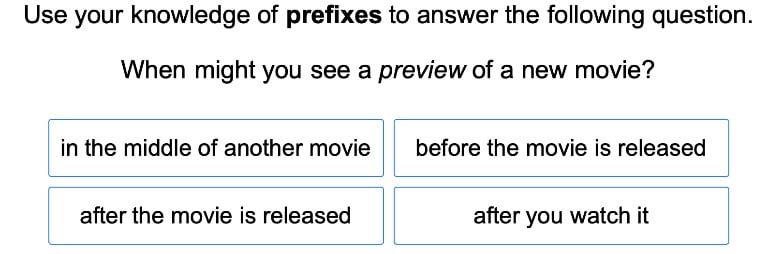
- Trade highlighters and have them go through the passage and mark the prefixes. Remind them that prefixes are placed in front of root words to change the word’s meaning. In general, prefixes are trickier to spot, but they will likely recognize some of them such as anti-, re-, or un-.
- When your child has found as many as possible, go through the text with them and share what else you found, such as agri-, geo-, or tele-.
- If they found something you missed, give a point and vice versa. Write points on the corner of the page.
- Once spotting the prefixes and suffixes is easy, take this activity to the next level. Have your child replace prefixes and suffixes in as many words as possible. What happens to the story when the replacements mean the same thing or close to the same thing? What happens when they mean the opposite?
Related learning resources