Activity
See-Through Egg Science
In first grade, students learn about living things – what they need, how they grow, and how they change. First graders are often given the opportunity to observe living things up close in the classroom, from insects to chicks. But what if things are growing that we can't see, such as seeds or chrysalises or eggs?
Here's a science exploration that your child can do with a real chicken egg. Using vinegar, you can make the egg's shell see-through, and observe what's going on inside!
What You Need:
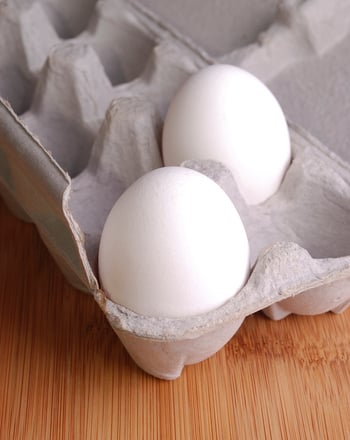
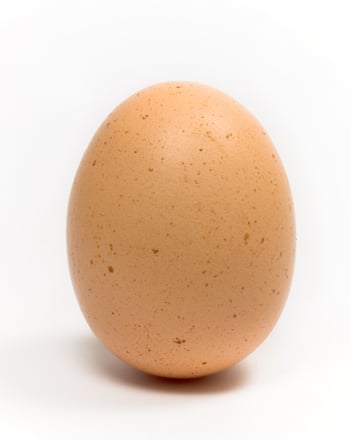
- 1 raw chicken egg in its shell (one from the grocery store is fine)
- White vinegar
- Clear glass jar with a cover
- Turkey baster
What You Do:
- Carefully place the whole, uncooked egg in the glass jar. Use a big spoon if necessary.
- Pour vinegar over the egg so that it is completely submersed in the vinegar.
- Cover the jar and observe. Discuss with your child: what is happening inside the jar? What can she see? (She should see bubbles forming.) What does she think might be happening?
- Explain to your child that the bubbles she sees in the jar tell you that the vinegar is dissolving the eggshell. It’s eating away at the “stuff” (calcium, mostly) that makes egg shells hard. Ask her what she thinks might happen if you let the vinegar keep eating away at the eggshell.
- Place the jar inside the refrigerator for about 24 hours. Take it out of the fridge, and use a baster to remove most of the vinegar. (Be careful not to poke or bump the egg! Remember, its shell has been dissolving.) Then pour fresh vinegar over the egg, and return to the refrigerator for another 24 hours.
- Continue in this manner until the eggshell becomes see-through. (The amount of time needed to achieve this varies with the size, variety, and thickness of the eggshell.)
- Gently use a large spoon to scoop out the egg. Now you have an egg without a shell! You can see the insides of the egg, which are being held inside by a membrane. Explain that the membrane is like a skin around the egg. Ask your child to consider why this membrane might be helpful to a growing chick inside its egg. (It keeps out dirt and germs and other harmful substances. It also lets air get in.)
- Encourage your child to observe the shell-less egg and describe what she sees. Can she name any other parts of the egg? (Yolk, egg white or albumen, etc.)
- Finally, let your child hold the egg in her hand over a sink and give a very gentle squeeze. (Watch out! If you squeeze too hard, the egg will explode!) What does it feel like? (It feels like a squishy pillow.) Discuss why the insides of the egg would be a perfect place for a baby chick to grow before it hatches. (It’s squishy, so it’s like a cushion for the growing chick, and the membrane and shell keep it safe.)
Related learning resources
Experiment with Boiled Egg Science
Activity
Experiment with Boiled Egg Science
This kindergarten science activity will help her explore the changing states of matter which transform an egg from raw to soft to hard-boiled.
Kindergarten
Science
Activity
Naked Egg
Activity
Naked Egg
While your cells are much too small to see without a microscope, you can create the look of a cell in your very own home with just an egg and vinegar!
3rd Grade
Science
Activity
Egg in a Bottle
Activity
Egg in a Bottle
Check out this mind-blowing experiment in which a hard-boiled egg will fit through an impossibly small opening with the help of only a few matches!
5th Grade
Science
Activity
Break the Egg
Activity
Break the Egg
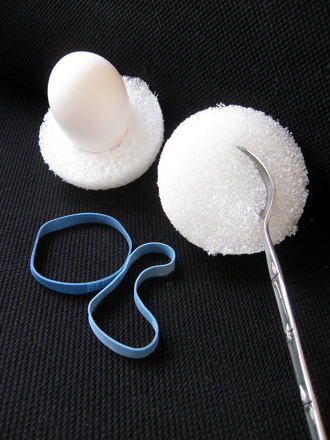
Illustrate the importance of bicycle safety in this simple 5th grade science experiment. All you need to start are an egg, a Styrofoam ball, and rubber bands.
5th Grade
Activity
Easter Egg Holder
Worksheet
Easter Egg Holder
Protect your precious egg hunt plunder with this Easter egg holder craft.
Worksheet
Play Egg Carton Addition
Activity
Play Egg Carton Addition
Using just an egg carton and some beans or pennies, you can play this game with your first grader and see real gains in core math skills.
1st Grade
Math
Activity
Writing Science Fiction
Worksheet
Writing Science Fiction
Would you rather travel through time or travel through space? Explore limitless frontiers while writing science fiction.
3rd Grade
Worksheet
World Egg Day
Worksheet
World Egg Day
Here's a holiday you didn't know existed: World Egg Day! Celebrate by cutting and pasting your own egg man or woman.
Preschool
Worksheet
Egg Lab
Activity
Egg Lab
This science fair project idea explores the egg's thin membrane.
3rd Grade
Science
Activity
Golden Egg
Activity
Golden Egg
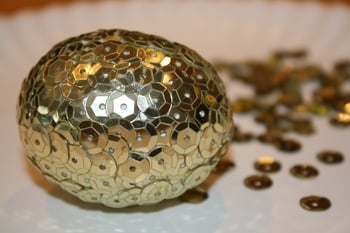
Show your fourth grader how to use sequins to create a gorgeous, gold-plated Easter egg.
4th Grade
Activity
Easter Egg Toppers
Activity
Easter Egg Toppers
Keep your boiled breakfast egg cozy and warm on Easter morning with a bright chick egg topper. This craft can also double as a puppet!
5th Grade
Activity
Learn Shadow Science
Activity
Learn Shadow Science
Introduce your child to science with something they see everyday--their shadow!
1st Grade
Math
Activity