
Subtopics:
- Analyze Characters
- Author's Purpose
- Cause and Effect
- Compare and Contrast✕
- Comprehension Questions
- Fact and Opinion
- Main Idea
- Make Connections
- Make Inferences
- Make Predictions
- Point of View and Perspective
- Problem and Solution
- Sequence of Events
- Story Elements
- Summarize and Retell
- Text Features
- Text Structure
- Theme
- Word Choice
Compare and Contrast Resources
176 results
English Language Arts
✕Sort by:
176 results
Sort by:


























About Compare And Contrast Resources
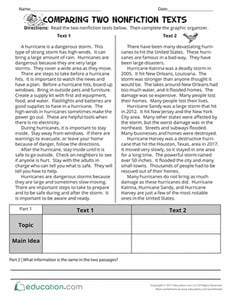
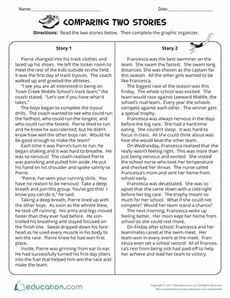
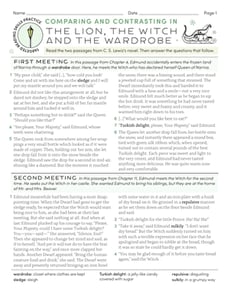
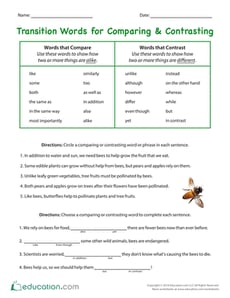
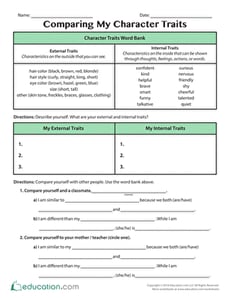
On Education.com, compare and contrast resources help students develop critical thinking by analyzing similarities and differences in texts, ideas, or items. Educators and parents can use graphic organizers such as Venn diagrams or compare/contrast maps, along with worksheets and lesson plans, to build understanding across subjects. These resources are useful for analyzing stories, nonfiction texts, historical events, or scientific concepts, encouraging students to think deeply about material while organizing information clearly.
Compare and contrast guides on Education.com include printable lessons, worksheets, and structured activities that enable learners to identify key aspects of different topics. Exercises often involve observing patterns, evaluating arguments, or distinguishing features, all of which enhance analytical writing and comprehension skills. The collection provides structured tools that support instruction on both fiction and nonfiction, fostering critical evaluation and creative thinking.
Educators and parents can utilize these resources to save time planning lessons, introduce sequence and organization, and make learning engaging. Classroom activities or at-home assignments can incorporate visual aids and charting exercises that make abstract comparisons concrete. With structured worksheets, students can practice making connections, during math, reading, social studies, or science, building a foundation for higher-level thinking.
Compare and contrast guides on Education.com include printable lessons, worksheets, and structured activities that enable learners to identify key aspects of different topics. Exercises often involve observing patterns, evaluating arguments, or distinguishing features, all of which enhance analytical writing and comprehension skills. The collection provides structured tools that support instruction on both fiction and nonfiction, fostering critical evaluation and creative thinking.
Educators and parents can utilize these resources to save time planning lessons, introduce sequence and organization, and make learning engaging. Classroom activities or at-home assignments can incorporate visual aids and charting exercises that make abstract comparisons concrete. With structured worksheets, students can practice making connections, during math, reading, social studies, or science, building a foundation for higher-level thinking.