
1st Grade Three-Dimensional Shapes Resources



























About 1st Grade Three-dimensional Shapes Resources
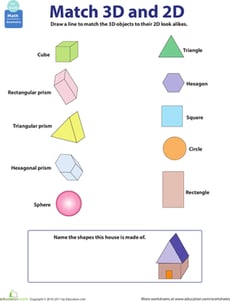
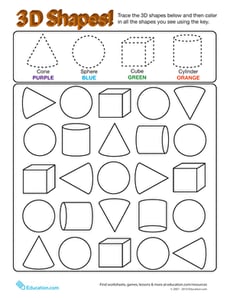
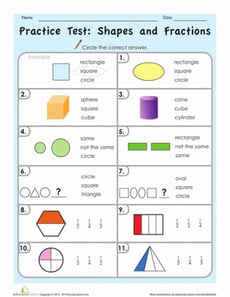
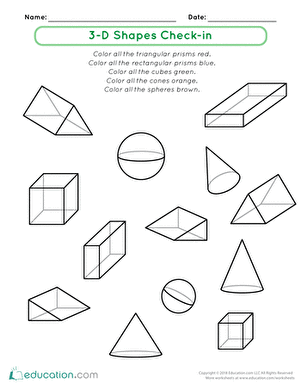
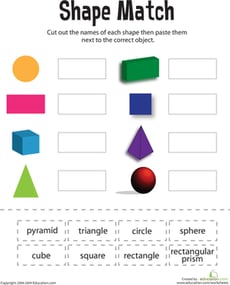
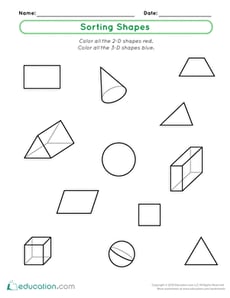
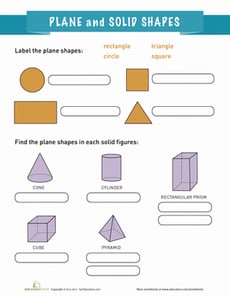
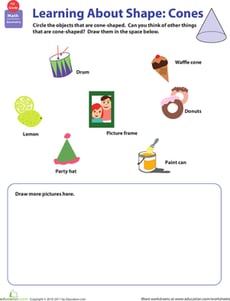
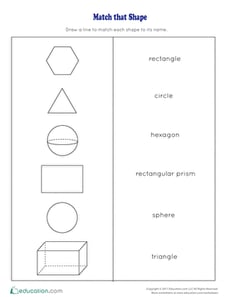
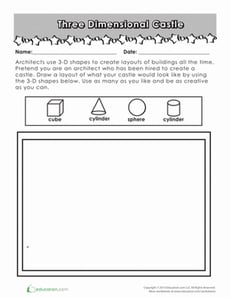
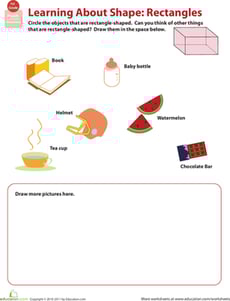
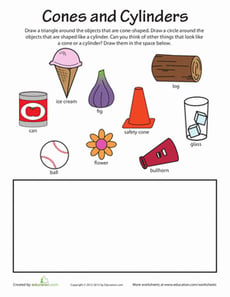
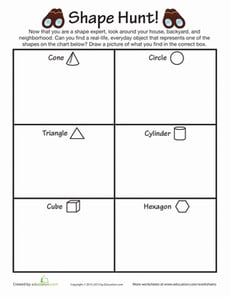
On Education.com, explore first grade three-dimensional shapes activities, worksheets, and lesson plans that help young learners recognize and understand the properties of 3D objects. These educational resources introduce students to shapes such as cubes, cones, cylinders, and spheres through interactive lessons and hands-on exercises. By focusing on spatial awareness and geometry, children develop foundational math skills while engaging in creative problem-solving.
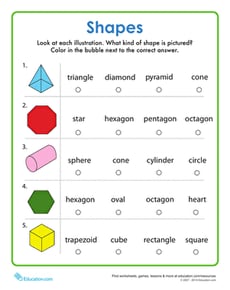
Electively, Education.com offers a variety of printable activities, digital exercises, and games that make learning about three-dimensional shapes fun and accessible. These resources provide engaging ways for children to practice shape identification, sorting, and comparisons, reinforcing visual and tactile learning. Teachers and parents can easily browse structured materials tailored for first graders to enhance their geometry understanding.
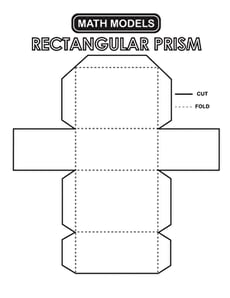
Educators and parents can use these shape resources to create structured lessons that promote critical thinking, observation, and reasoning. Practical activities, such as building with blocks or examining household objects, support hands-on learning and help solidify concepts. Navigating the page provides convenient access to worksheets and exercises that reinforce early geometry skills while keeping students motivated to explore the world of shapes.
Electively, Education.com offers a variety of printable activities, digital exercises, and games that make learning about three-dimensional shapes fun and accessible. These resources provide engaging ways for children to practice shape identification, sorting, and comparisons, reinforcing visual and tactile learning. Teachers and parents can easily browse structured materials tailored for first graders to enhance their geometry understanding.
Educators and parents can use these shape resources to create structured lessons that promote critical thinking, observation, and reasoning. Practical activities, such as building with blocks or examining household objects, support hands-on learning and help solidify concepts. Navigating the page provides convenient access to worksheets and exercises that reinforce early geometry skills while keeping students motivated to explore the world of shapes.