2nd Grade Common Core Classifying Two-Dimensional Shapes Workbooks
Common Core Quick Links:
Common Core Standards for 2nd Grade Math, Common Core Standards for 2nd Grade ELA
2 results
Math
✕Workbooks
✕2nd Grade
✕Common Core
✕2 results
Subtopics:
2nd Grade Common Core Classifying Two-Dimensional Shapes Workbooks
Common Core Quick Links:
Common Core Standards for 2nd Grade Math, Common Core Standards for 2nd Grade ELA2 results
Math
✕Workbooks
✕2nd Grade
✕Common Core
✕2 results
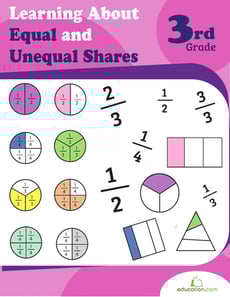

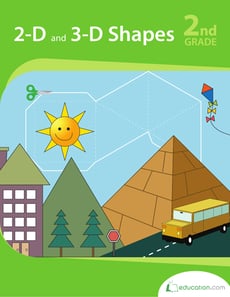

About 2nd Grade Common Core Classifying Two-dimensional Shapes Workbooks
On Education.com, this page offers a collection of 2nd Grade Common Core classifying 2D shapes worksheets. These printable materials help students recognize, differentiate, and sort shapes based on attributes like the number of sides, vertices, and angles. The resources are designed to support foundational geometry skills by engaging students in hands-on activities and visual exercises. Teachers and parents can use these worksheets to reinforce classroom learning, improve shape recognition, and enhance spatial reasoning.
With worksheets like shape sorting activities, Venn diagrams, and attribute charts, students will practice identifying triangles, rectangles, squares, trapezoids, pentagons, and hexagons. Such exercises help children develop observation skills and understand geometric properties, aligned with the standards 2.G.1 and 2.G.4. Including hands-on tasks encourages active learning and critical thinking as students compare and classify different shapes. These practical activities support both classroom instruction and at-home learning.
Educators and parents can easily incorporate these worksheets into lesson plans or daily practice. Using printable shapes exercises saves planning time while providing structured, standards-aligned activities. Educators can assign practice pages for homework or classroom stations. Meanwhile, parents can reinforce learning at home with hands-on activities that make geometry engaging and interactive.
With worksheets like shape sorting activities, Venn diagrams, and attribute charts, students will practice identifying triangles, rectangles, squares, trapezoids, pentagons, and hexagons. Such exercises help children develop observation skills and understand geometric properties, aligned with the standards 2.G.1 and 2.G.4. Including hands-on tasks encourages active learning and critical thinking as students compare and classify different shapes. These practical activities support both classroom instruction and at-home learning.
Educators and parents can easily incorporate these worksheets into lesson plans or daily practice. Using printable shapes exercises saves planning time while providing structured, standards-aligned activities. Educators can assign practice pages for homework or classroom stations. Meanwhile, parents can reinforce learning at home with hands-on activities that make geometry engaging and interactive.