Offline Educational Kindergarten Common Core Subtraction Games
Common Core Quick Links:
Common Core Standards for Kindergarten Math, Common Core Standards for Kindergarten ELA
1 result
Math
✕Kindergarten
✕Offline Games
✕Common Core
✕1 result
Subtopics:
Offline Educational Kindergarten Common Core Subtraction Games
Common Core Quick Links:
Common Core Standards for Kindergarten Math, Common Core Standards for Kindergarten ELA1 result
Math
✕Kindergarten
✕Offline Games
✕Common Core
✕1 result

About Offline Educational Kindergarten Common Core Subtraction Games
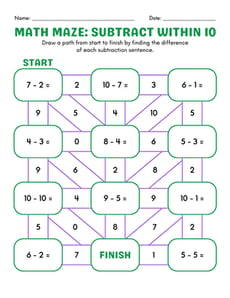
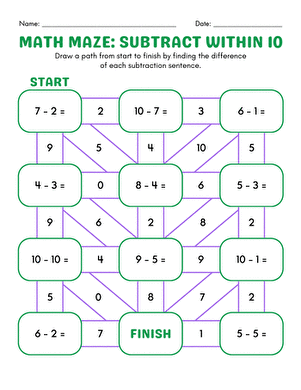
On Education.com, this page features offline, hands-on, and Common Core-aligned kindergarten subtraction games, including Build and Remove, Smash Dough, and Subtraction Bowling. These activities help young learners understand taking away and help build fact fluency within 10 by connecting physical objects to simple equations. Materials like manipulatives, dice, and 10-frames make abstract concepts concrete for young students.
Materials such as printable worksheets, classroom lesson plans, and hands-on instructional guides provide educators and parents with structured approaches to teaching subtraction concepts. Educators can incorporate checkbox options, step-by-step instructions, and interactive prompts to create engaging learning experiences at home or in the classroom. Using physical games enhances numeracy skills and supports early math development.
Parents and teachers can use these resources to introduce subtraction in a fun and accessible way, helping students build confidence and understanding. Combining hands-on activities with math practice provides a comprehensive learning approach that reinforces foundational math skills. This ensures children develop both problem-solving and calculation abilities while enjoying learning.
Materials such as printable worksheets, classroom lesson plans, and hands-on instructional guides provide educators and parents with structured approaches to teaching subtraction concepts. Educators can incorporate checkbox options, step-by-step instructions, and interactive prompts to create engaging learning experiences at home or in the classroom. Using physical games enhances numeracy skills and supports early math development.
Parents and teachers can use these resources to introduce subtraction in a fun and accessible way, helping students build confidence and understanding. Combining hands-on activities with math practice provides a comprehensive learning approach that reinforces foundational math skills. This ensures children develop both problem-solving and calculation abilities while enjoying learning.