
Preschool Two-Dimensional Shapes Guided Lessons

About Preschool Two-dimensional Shapes Guided Lessons
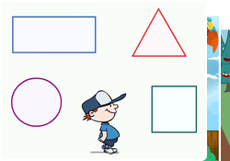
On Education.com, preschool two-dimensional shapes guided lessons teach children core concepts through interactive activities like shape hunts, building with craft sticks or playdough, sorting games, finger painting, and shape-themed art. These lessons are designed to help young learners recognize basic shapes such as circles, squares, triangles, and rectangles, while understanding their attributes including sides and corners in a fun and engaging way. The hands-on approach supports foundational geometry skills, enhances fine motor control, and encourages spatial awareness.
Students can explore animated lessons, worksheet printables, and printable cutouts featuring shapes to reinforce recognition and description of 2D figures. The math activities align with early childhood education standards, making it easy for parents and teachers to access structured yet playful learning materials that strengthen shape identification, pattern recognition, and categorization skills.
By providing these guided lessons on Education.com, educators and parents can save time on lesson planning while offering children a variety of sensory, visual, and kinesthetic experiences. From classroom centers to at-home practice, children gain confidence in their ability to identify and describe shapes, laying the foundation for more advanced geometric reasoning and spatial problem-solving.
Students can explore animated lessons, worksheet printables, and printable cutouts featuring shapes to reinforce recognition and description of 2D figures. The math activities align with early childhood education standards, making it easy for parents and teachers to access structured yet playful learning materials that strengthen shape identification, pattern recognition, and categorization skills.
By providing these guided lessons on Education.com, educators and parents can save time on lesson planning while offering children a variety of sensory, visual, and kinesthetic experiences. From classroom centers to at-home practice, children gain confidence in their ability to identify and describe shapes, laying the foundation for more advanced geometric reasoning and spatial problem-solving.