
Offline Educational Preschool Classifying Two-Dimensional Shapes Games

















About Offline Educational Preschool Classifying Two-dimensional Shapes Games
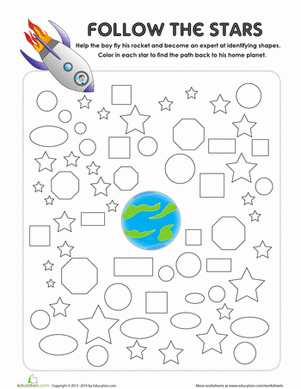
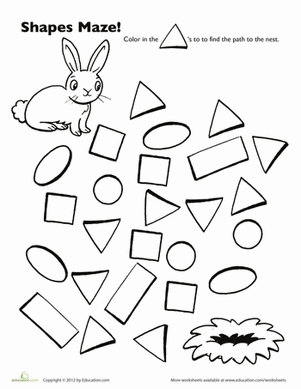
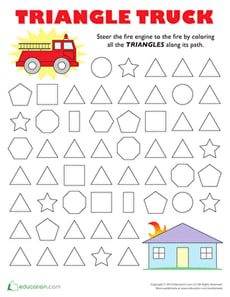
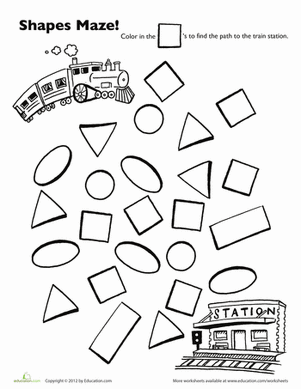
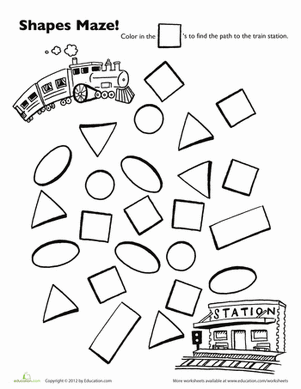
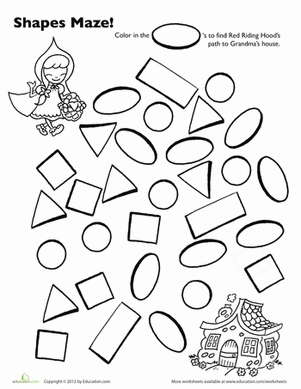
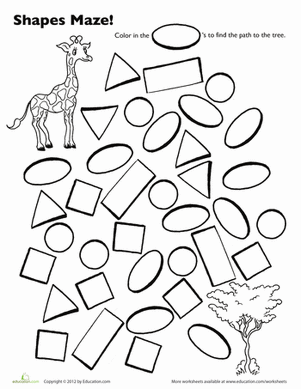
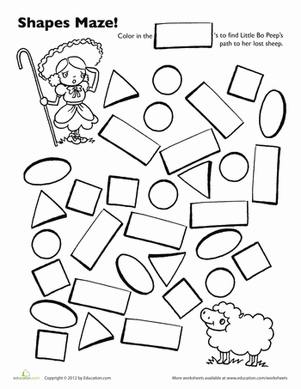
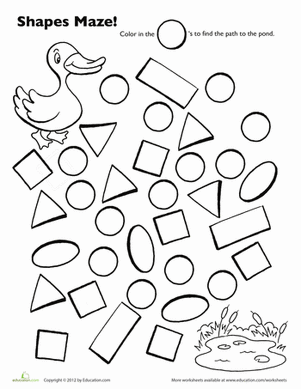
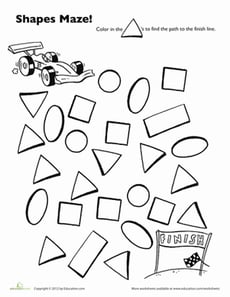
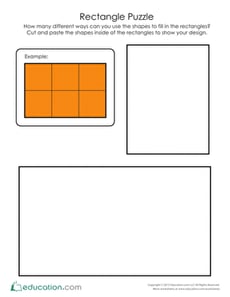
On Education.com, preschool shape classification games provide hands-on learning activities that help young children recognize and categorize 2D shapes such as circles, squares, triangles, and rectangles. These games often include shape sorting with cards, blocks, or everyday objects, making it interactive and engaging. Using such practical exercises supports the development of spatial awareness, fine motor skills, and early math understanding. By integrating tactile activities into preschool lessons, educators can make learning about shapes both fun and meaningful.
Browse Education.com to find printable worksheets, shape bingo games, tactile classification activities, and appropriate lesson plans focusing on 2D shape recognition. These resources cater to early childhood educators and parents, providing structured ways to practice shape sorting and identification. The materials reinforce geometry concepts through visual, physical, and interactive experiences, enhancing both cognition and coordination. With easy-to-access printable and activity-based options, caring adults can incorporate engaging shape-related exercises into daily learning routines.
Engage young learners with stall, sensory exploration tasks, or shape matching activities that build foundational math skills. These hands-on, offline shape classification games allow children to learn through movement, tactile interaction, and creativity, fostering both educational growth and enjoyment. Educators and parents can access and utilize a range of structured lesson plans and resources on Education.com to make early geometry learning accessible and enjoyable.
Browse Education.com to find printable worksheets, shape bingo games, tactile classification activities, and appropriate lesson plans focusing on 2D shape recognition. These resources cater to early childhood educators and parents, providing structured ways to practice shape sorting and identification. The materials reinforce geometry concepts through visual, physical, and interactive experiences, enhancing both cognition and coordination. With easy-to-access printable and activity-based options, caring adults can incorporate engaging shape-related exercises into daily learning routines.
Engage young learners with stall, sensory exploration tasks, or shape matching activities that build foundational math skills. These hands-on, offline shape classification games allow children to learn through movement, tactile interaction, and creativity, fostering both educational growth and enjoyment. Educators and parents can access and utilize a range of structured lesson plans and resources on Education.com to make early geometry learning accessible and enjoyable.