
Preschool Dot to Dot Place Value Worksheets



About Preschool Dot To Dot Place Value Worksheets
On Education.com, Preschool Dot to Dot Place Value Worksheets provide simple, hands-on activities to introduce young children to place-value concepts. These printable worksheets combine engaging dot-to-dot exercises with lessons that help students understand the value of digits in numbers, such as ones and tens. The materials are ideal for early learners and provide structured practice that reinforces foundational math skills.
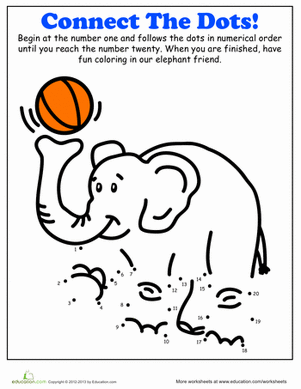
On Education.com, many children’s mathematics worksheets incorporate dot-to-dot numbering activities that naturally teach number sequencing and accuracy. By adapting this popular game for educational purposes, teachers and parents can create interactive exercises that build finger dexterity, number recognition, and visualization skills. These resources foster both basic arithmetic understanding and handwriting practice in a fun, approachable way.
On Education.com, educators and caregivers can access ready-to-use classroom and home activities that combine dot-to-dot games with advanced place-value lessons. These resources simplify lesson planning, reduce screen time, and make learning early math concepts exciting for children. Parents can also track progress and provide structured guidance while enhancing problem-solving, number sense, and pattern recognition.
On Education.com, many children’s mathematics worksheets incorporate dot-to-dot numbering activities that naturally teach number sequencing and accuracy. By adapting this popular game for educational purposes, teachers and parents can create interactive exercises that build finger dexterity, number recognition, and visualization skills. These resources foster both basic arithmetic understanding and handwriting practice in a fun, approachable way.
On Education.com, educators and caregivers can access ready-to-use classroom and home activities that combine dot-to-dot games with advanced place-value lessons. These resources simplify lesson planning, reduce screen time, and make learning early math concepts exciting for children. Parents can also track progress and provide structured guidance while enhancing problem-solving, number sense, and pattern recognition.