
Multiply Using Arrays Guided Lessons



About Multiply Using Arrays Guided Lessons
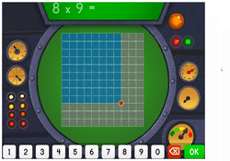
On Education.com, multiply using arrays guided lessons teach students to visualize multiplication by arranging objects like dots or blocks in rows and columns. This helps learners understand concepts such as equal groups, the commutative property, and repeated addition, all through tangible and interactive examples. Learning to form and interpret arrays provides a foundational step toward understanding multiplication facts and fostering mathematical reasoning skills.
Education.com offers a variety of resources, including printable worksheets, interactive games, and lesson plans that support multiplying with arrays. These materials allow students to practice visualizing multiplication, developing their ability to recognize patterns, and translating images into mathematical expressions. Educators and parents can use structured exercises and real-world examples to make learning engaging and accessible.
Using array multiplication lessons at home or in the classroom provides a clear, hands-on way to build foundational math skills while making abstract concepts concrete. These resources help children develop confidence in their ability to solve multiplication problems, recognize patterns, and apply mathematical thinking in everyday contexts. Accessing these materials saves planning time and enhances instructional effectiveness.
Education.com offers a variety of resources, including printable worksheets, interactive games, and lesson plans that support multiplying with arrays. These materials allow students to practice visualizing multiplication, developing their ability to recognize patterns, and translating images into mathematical expressions. Educators and parents can use structured exercises and real-world examples to make learning engaging and accessible.
Using array multiplication lessons at home or in the classroom provides a clear, hands-on way to build foundational math skills while making abstract concepts concrete. These resources help children develop confidence in their ability to solve multiplication problems, recognize patterns, and apply mathematical thinking in everyday contexts. Accessing these materials saves planning time and enhances instructional effectiveness.