Commonly Confused Words Lesson Plans

1 result
English Language Arts
✕Lesson Plans
✕1 result
Commonly Confused Words Lesson Plans
1 result
English Language Arts
✕Lesson Plans
✕1 result

About Commonly Confused Words Lesson Plans
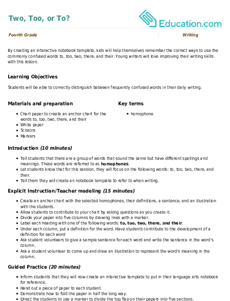
On Education.com, commonly confused words lesson plans help students learn to differentiate between similar-looking or sounding words, such as their/there/they're or to/too/two. These lessons often use engaging activities to reinforce understanding, including worksheets, fill-in-the-blank exercises, and digital flashcards. They are designed for educators and parents to provide structured practice that builds confidence and literacy skills.
This page offers printable worksheets, interactive exercises, and lesson plans that focus on helping students recognize and correctly use frequently confused words. Resources include exercises for 2nd through 4th-grade students that incorporate visual cues, sentence practice, and targeted quizzes. These materials support curriculum standards and promote reading fluency by combining image-based learning with practical application.
Educators and parents can use these materials to prepare students for written assignments, improve spelling and grammar, and discuss contextual usage of common words. The resources provide a time-effective way to reinforce lessons through structured worksheets, interactive games, and practice exercises, ensuring students stay engaged while mastering tricky vocabulary.
This page offers printable worksheets, interactive exercises, and lesson plans that focus on helping students recognize and correctly use frequently confused words. Resources include exercises for 2nd through 4th-grade students that incorporate visual cues, sentence practice, and targeted quizzes. These materials support curriculum standards and promote reading fluency by combining image-based learning with practical application.
Educators and parents can use these materials to prepare students for written assignments, improve spelling and grammar, and discuss contextual usage of common words. The resources provide a time-effective way to reinforce lessons through structured worksheets, interactive games, and practice exercises, ensuring students stay engaged while mastering tricky vocabulary.