
Classifying Two-Dimensional Shapes Resources
500 results
Math
✕Sort by:
500 results
Sort by:



























About Classifying Two-dimensional Shapes Resources
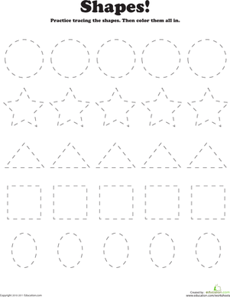
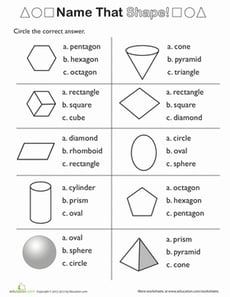
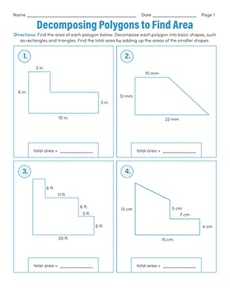
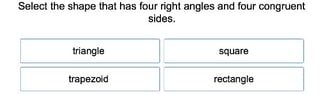
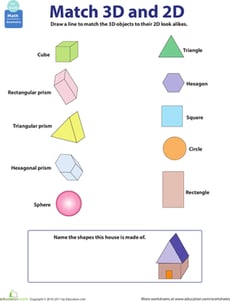
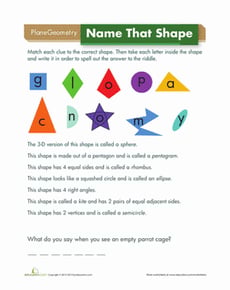
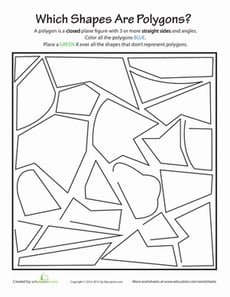
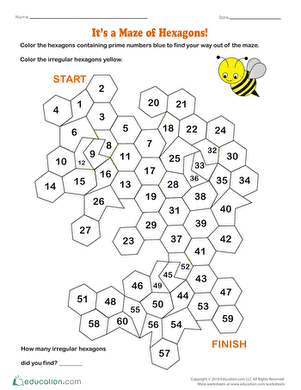
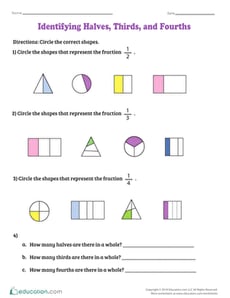
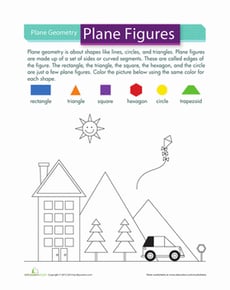
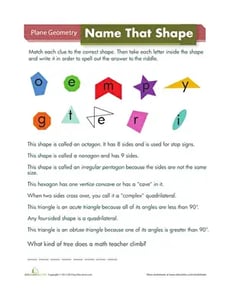
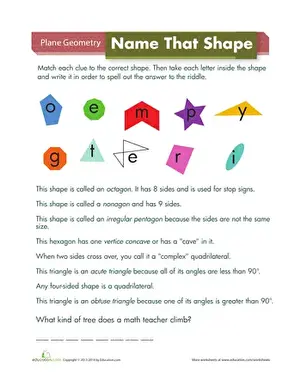
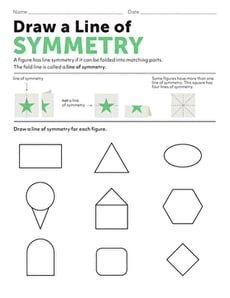
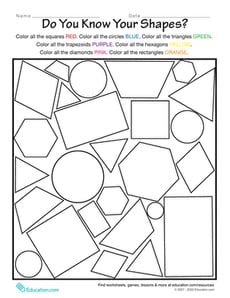
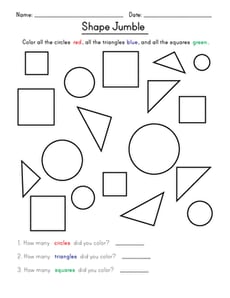
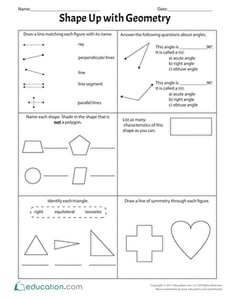
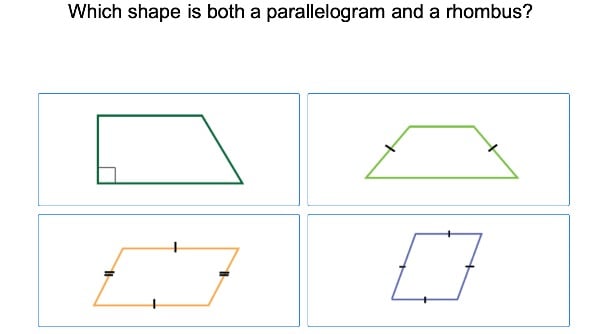
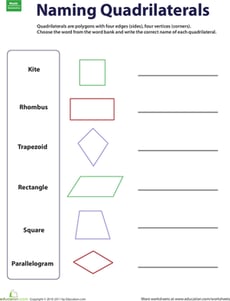
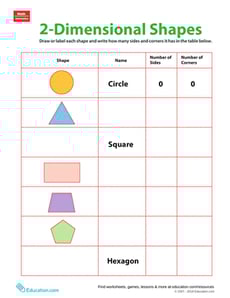
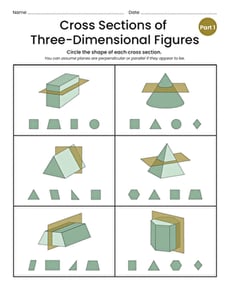
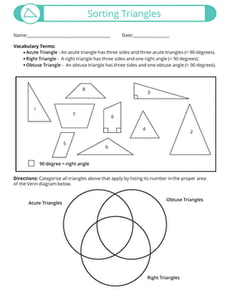
On Education.com, students can explore resources that introduce the concepts of classifying two-dimensional shapes based on attributes such as sides, angles, parallel lines, and vertices. These materials help learners identify and differentiate between triangles, quadrilaterals, and other polygons while understanding geometric hierarchies and classifications. Resources include printable worksheets, shape sorting activities, and interactive flashcards designed to strengthen geometry skills for elementary students.
Educators and parents can access a wide variety of classroom-ready lesson plans and practice pages that teach students to classify and analyze shapes based on size, length, and angle types. These materials support hands-on learning, promote critical thinking, and reinforce foundational geometry concepts. Using ready-made worksheets and interactive activities simplifies lesson planning and provides engaging ways to practice shape recognition and classification.
Structured to make learning accessible and fun, these materials support students in developing geometric reasoning, spatial awareness, and shape discrimination skills. Whether used in structured classroom lessons, homeschool settings, or at-home practice, this collection provides resources that build confidence and improve understanding of basic geometry principles.
Educators and parents can access a wide variety of classroom-ready lesson plans and practice pages that teach students to classify and analyze shapes based on size, length, and angle types. These materials support hands-on learning, promote critical thinking, and reinforce foundational geometry concepts. Using ready-made worksheets and interactive activities simplifies lesson planning and provides engaging ways to practice shape recognition and classification.
Structured to make learning accessible and fun, these materials support students in developing geometric reasoning, spatial awareness, and shape discrimination skills. Whether used in structured classroom lessons, homeschool settings, or at-home practice, this collection provides resources that build confidence and improve understanding of basic geometry principles.