Common Core Ecosystems Resources
Common Core Quick Links:
Common Core State Standards
6 results
Science
✕Common Core
✕6 results
Common Core Ecosystems Resources
Common Core Quick Links:
Common Core State Standards6 results
Science
✕Common Core
✕6 results





About Common Core Ecosystems Resources
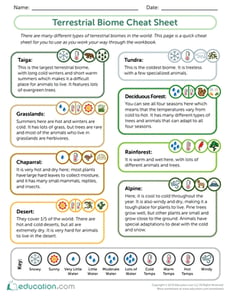
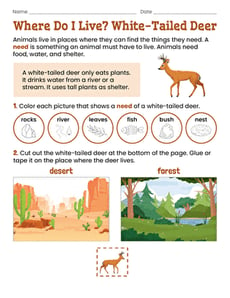
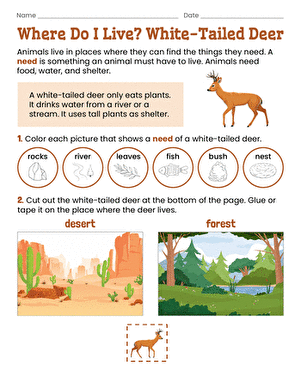
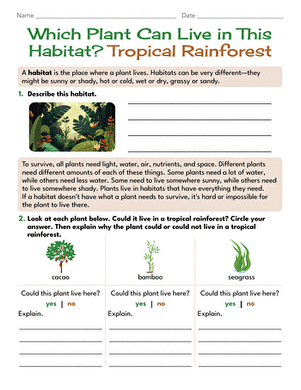
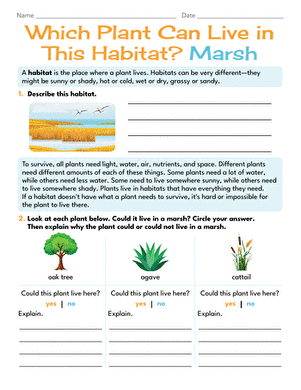
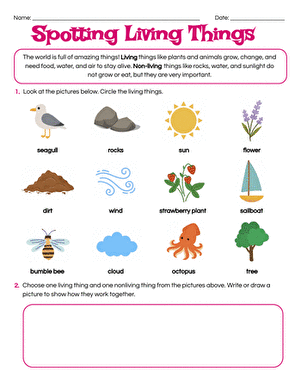
On Education.com, the page about Common Core ecosystems resources provides educational materials that help students explore how living organisms interact within environments, including the study of biotic and abiotic factors, energy flow, and organism roles like producers, consumers, and decomposers. These resources support science and reading standards by integrating hands-on activities, worksheets, and lesson plans that make ecology concepts accessible and engaging. Educators and parents can use these materials to teach about ecosystems through activities that combine scientific exploration with literacy skills, encouraging observation, critical thinking, and understanding of the natural world.
Affordable and easy-to-access, Education.com offers a wide range of ecology-focused worksheets and classroom resources, including printable activities covering food chains, habitat interactions, and population dynamics. Materials are designed to be teacher-friendly and adaptable to different grade levels from elementary to middle school, ensuring that students can grasp complex concepts through structured exercises, diagrams, and experiments. These resources enable educators and parents to provide immersive ecology lessons that blend science instruction with reading comprehension, helping students connect scientific ideas to broader environmental awareness.
By using these Common Core ecosystems resources, instructors and parents can create engaging learning experiences that build science understanding, reinforce literacy skills, and foster curiosity about the environment. Whether conducting classroom experiments, exploring ecosystems digitally, or engaging in hands-on field activities, students gain practical knowledge about living systems and the importance of biodiversity. Integrating resources from Education.com into instruction allows for a comprehensive approach to teaching ecosystems that supports curriculum standards, encourages exploration, and inspires a lifelong interest in science.
Affordable and easy-to-access, Education.com offers a wide range of ecology-focused worksheets and classroom resources, including printable activities covering food chains, habitat interactions, and population dynamics. Materials are designed to be teacher-friendly and adaptable to different grade levels from elementary to middle school, ensuring that students can grasp complex concepts through structured exercises, diagrams, and experiments. These resources enable educators and parents to provide immersive ecology lessons that blend science instruction with reading comprehension, helping students connect scientific ideas to broader environmental awareness.
By using these Common Core ecosystems resources, instructors and parents can create engaging learning experiences that build science understanding, reinforce literacy skills, and foster curiosity about the environment. Whether conducting classroom experiments, exploring ecosystems digitally, or engaging in hands-on field activities, students gain practical knowledge about living systems and the importance of biodiversity. Integrating resources from Education.com into instruction allows for a comprehensive approach to teaching ecosystems that supports curriculum standards, encourages exploration, and inspires a lifelong interest in science.