
2nd Grade Silent E Resources












About 2nd Grade Silent E Resources
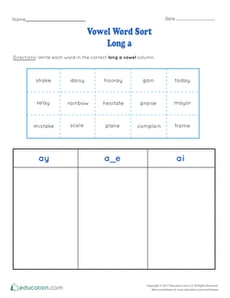
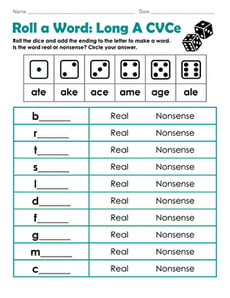
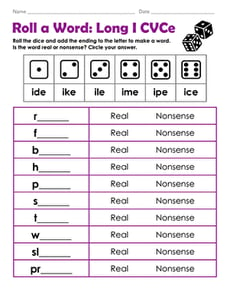
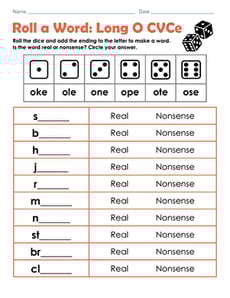
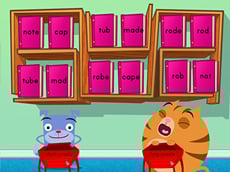
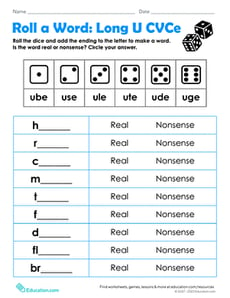
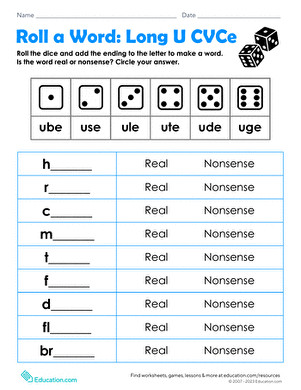
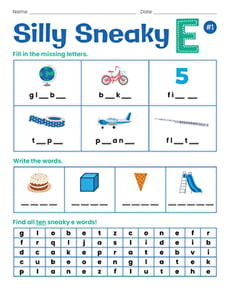
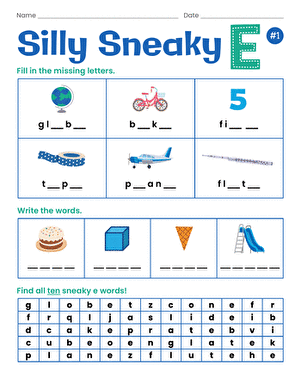
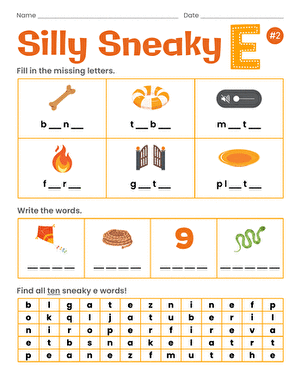
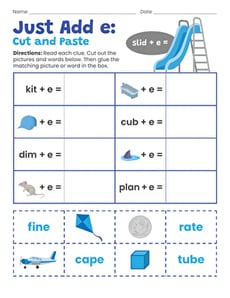
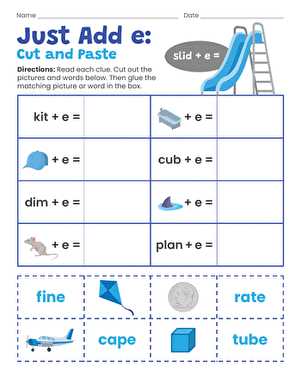
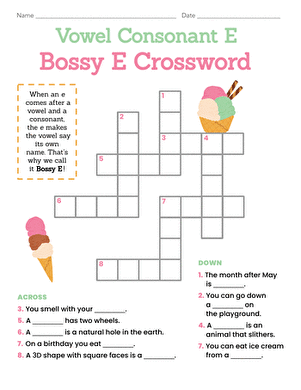
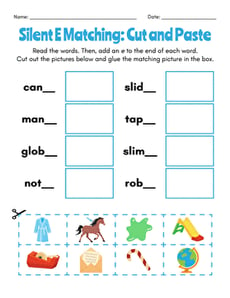
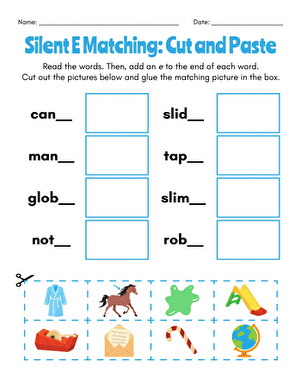
On Education.com, provide materials that introduce the silent e in second-grade reading, including worksheets, downloadable activities, and interactive exercises designed to enhance phonics skills and reading fluency. These resources help young learners understand how silent e changes the pronunciation and meaning of words, supporting early literacy development. Educators and parents can access hands-on practices that reinforce phonics rules, making learning engaging and accessible.
Explore a range of pages offering phonics worksheets, printable practice sheets, and digital games focused on second-grade silent e lessons. These materials cover sound-spelling patterns, word recognition, and guided reading strategies, providing comprehensive support for classroom instruction or at-home learning. Educators can use structured lesson plans, while parents can provide practice that builds confidence and reading accuracy.
Engage children with materials that reinforce silent e concepts through interactive exercises, story-based activities, and decoding practice. These resources enable educators and parents to track progress easily while fostering a love for reading. By using these phonics tools, learners gain practical experience applying silent e rules in context, improving both pronunciation and comprehension.
Explore a range of pages offering phonics worksheets, printable practice sheets, and digital games focused on second-grade silent e lessons. These materials cover sound-spelling patterns, word recognition, and guided reading strategies, providing comprehensive support for classroom instruction or at-home learning. Educators can use structured lesson plans, while parents can provide practice that builds confidence and reading accuracy.
Engage children with materials that reinforce silent e concepts through interactive exercises, story-based activities, and decoding practice. These resources enable educators and parents to track progress easily while fostering a love for reading. By using these phonics tools, learners gain practical experience applying silent e rules in context, improving both pronunciation and comprehension.