
Subtopics:
- Analyze Characters
- Author's Purpose
- Cause and Effect
- Compare and Contrast
- Comprehension Questions
- Fact and Opinion
- Main Idea
- Make Connections
- Make Inferences
- Make Predictions
- Point of View and Perspective
- Problem and Solution
- Sequence of Events✕
- Story Elements
- Summarize and Retell
- Text Features
- Text Structure
- Theme
- Word Choice
Sequence of Events Resources
137 results
English Language Arts
✕Sort by:
137 results
Sort by:





















About Sequence Of Events Resources
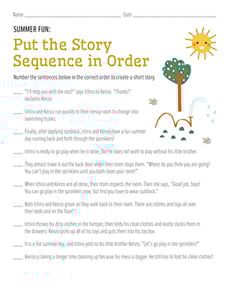
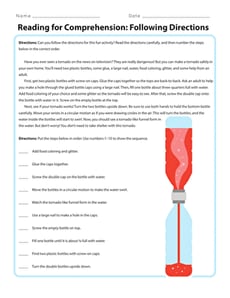
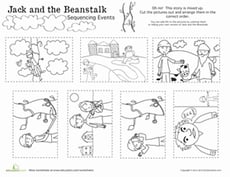
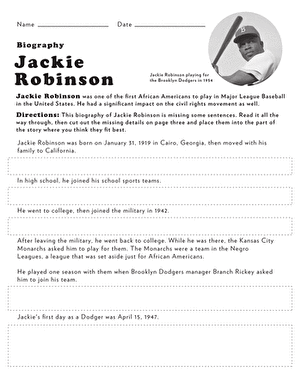
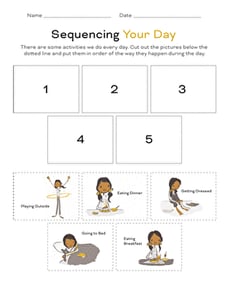
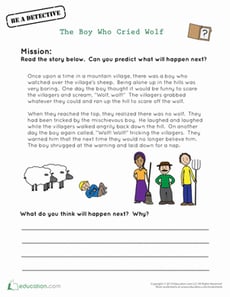
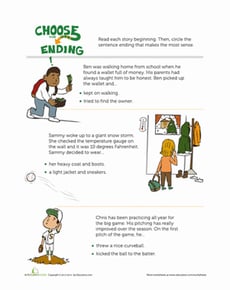
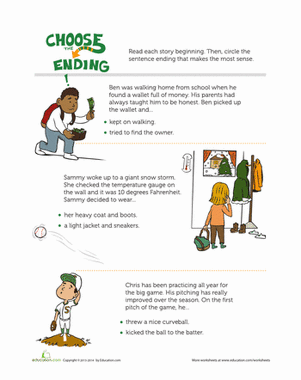
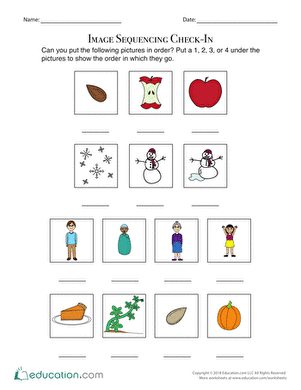
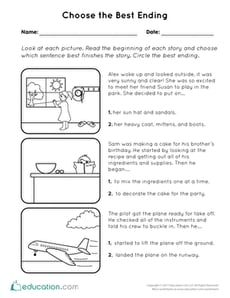
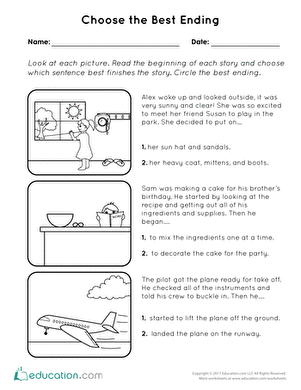
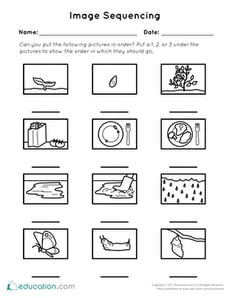
On Education.com, sequence of events resources help young learners understand the order of different actions, stories, or steps in a process. These materials include worksheets, printable graphic organizers like story maps, picture cards, task cards, and digital interactive activities that guide students through arranging narrations logically with transition words such as 'first,' 'next,' and 'then.' Using these resources supports comprehension skills, enhances storytelling abilities, and encourages chronological thinking.
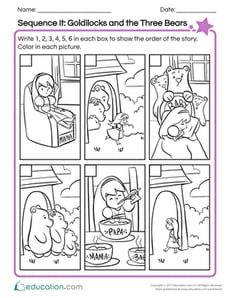
Discover a variety of sequence of events worksheets and printables that provide structured practice in identifying and organizing story elements. These resources include scene strips, sequencing puzzles, cut-and-paste activities, and interactive story maps, all designed to make learning engaging and hands-on. Educators and parents can use these materials to reinforce reading comprehension, writing, and critical thinking skills in an accessible format.
Explore weekly lesson plans, classroom activites, and materials that Jacqueline shared on Education.com to help teachers and parents create engaging sequencing exercises. These resources make it easy to build storytelling skills, support literacy, and encourage logical thinking through fun, structured activities. By using clear, step-by-step sequencing challenges, learners can improve their ability to organize ideas and understand narrative structure.
Discover a variety of sequence of events worksheets and printables that provide structured practice in identifying and organizing story elements. These resources include scene strips, sequencing puzzles, cut-and-paste activities, and interactive story maps, all designed to make learning engaging and hands-on. Educators and parents can use these materials to reinforce reading comprehension, writing, and critical thinking skills in an accessible format.
Explore weekly lesson plans, classroom activites, and materials that Jacqueline shared on Education.com to help teachers and parents create engaging sequencing exercises. These resources make it easy to build storytelling skills, support literacy, and encourage logical thinking through fun, structured activities. By using clear, step-by-step sequencing challenges, learners can improve their ability to organize ideas and understand narrative structure.