
3rd Grade Make Predictions Resources








About 3rd Grade Make Predictions Resources
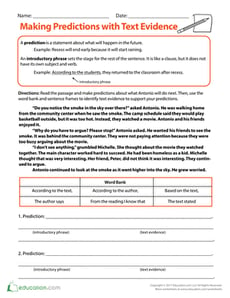
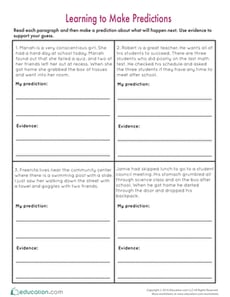
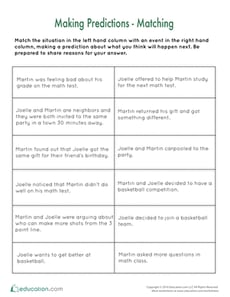
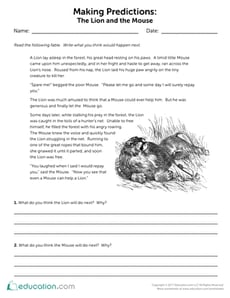
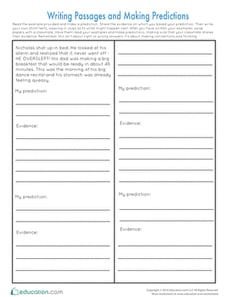
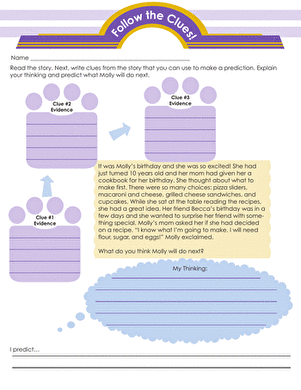
On Education.com, third-grade prediction resources help students develop critical thinking by using clues, context, and prior knowledge. These resources include interactive worksheets, printable activities with text evidence, story starters, and exercises that guide students to make and support predictions while reading or exploring new concepts.
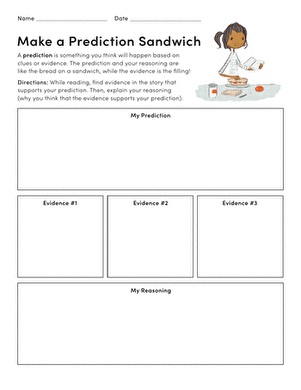
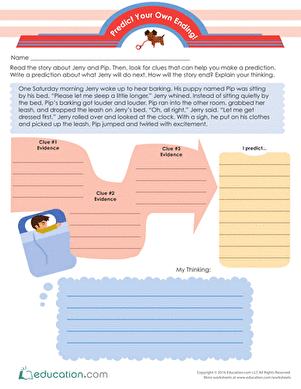
The site offers a variety of prediction-focused resources such as prediction charts, story beginnings, and book-specific activities like Enemy Pie. Several activities encourage students to practice using clues, analyze story elements, and build confidence in making predictions based on context and logic. These materials are suitable for classroom or home learning and are designed to build foundational comprehension skills.
Educators and parents can use these resources to save time designing lesson plans or practice exercises for reading and critical thinking reinforcement. Students can engage with hands-on activities and interactive worksheets that make learning fun and memorable while strengthening reading and inference skills.
The site offers a variety of prediction-focused resources such as prediction charts, story beginnings, and book-specific activities like Enemy Pie. Several activities encourage students to practice using clues, analyze story elements, and build confidence in making predictions based on context and logic. These materials are suitable for classroom or home learning and are designed to build foundational comprehension skills.
Educators and parents can use these resources to save time designing lesson plans or practice exercises for reading and critical thinking reinforcement. Students can engage with hands-on activities and interactive worksheets that make learning fun and memorable while strengthening reading and inference skills.