
Subtopics:
- Analyze Characters
- Author's Purpose
- Cause and Effect
- Compare and Contrast
- Comprehension Questions
- Fact and Opinion
- Main Idea
- Make Connections
- Make Inferences
- Make Predictions
- Point of View and Perspective
- Problem and Solution
- Sequence of Events
- Story Elements
- Summarize and Retell
- Text Features✕
- Text Structure
- Theme
- Word Choice
Text Features Resources
244 results
English Language Arts
✕Sort by:
244 results
Sort by:
























About Text Features Resources
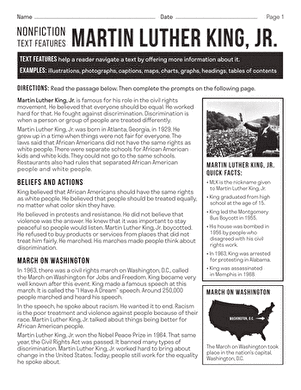
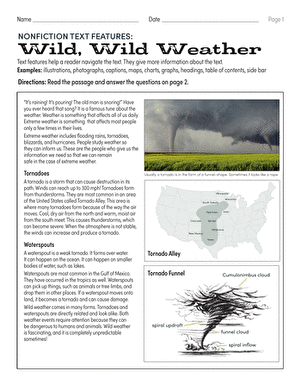
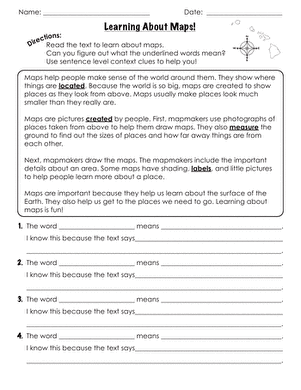
On Education.com, text features resources provide tools, activities, and examples like headings, captions, glossaries, indexes, bold print, and graphics to help students and educators navigate nonfiction texts. These resources focus on teaching the purpose and use of each text feature to improve reading comprehension and enhance informational literacy. Materials include worksheets, anchor charts, and lesson plans designed to make reading strategies accessible and engaging.
Explore browsing pages that include worksheet templates, interactive exercises, and hands-on activities centered on text features. Resources provide practical ways for teachers and parents to reinforce topics such as why headings organize content, how captions support comprehension, and the role of glossaries and indexes in non-fiction. Fostering these skills empowers students to independently interpret informational texts.
Find beginner-friendly exercises, graphic organizers, and classroom-ready lesson plans to help young readers identify, understand, and apply text features. These resources save educators time by providing structured yet adaptable materials for teaching that can be used in classroom rotations, literacy centers, or at-home learning activities. Supporting students in mastering text features builds reading fluency and confidence.
Explore browsing pages that include worksheet templates, interactive exercises, and hands-on activities centered on text features. Resources provide practical ways for teachers and parents to reinforce topics such as why headings organize content, how captions support comprehension, and the role of glossaries and indexes in non-fiction. Fostering these skills empowers students to independently interpret informational texts.
Find beginner-friendly exercises, graphic organizers, and classroom-ready lesson plans to help young readers identify, understand, and apply text features. These resources save educators time by providing structured yet adaptable materials for teaching that can be used in classroom rotations, literacy centers, or at-home learning activities. Supporting students in mastering text features builds reading fluency and confidence.