
Subtopics:
- Analyze Characters
- Author's Purpose
- Cause and Effect
- Compare and Contrast
- Comprehension Questions
- Fact and Opinion
- Main Idea
- Make Connections
- Make Inferences
- Make Predictions
- Point of View and Perspective
- Problem and Solution
- Sequence of Events✕
- Story Elements
- Summarize and Retell
- Text Features
- Text Structure
- Theme
- Word Choice
Sequence of Events Worksheets


























About Sequence Of Events Worksheets
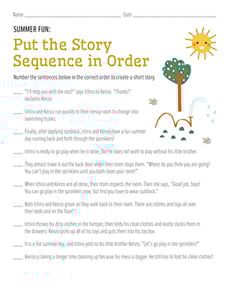
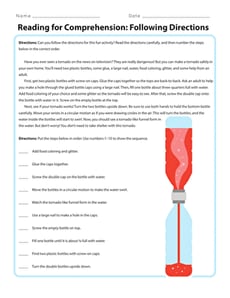
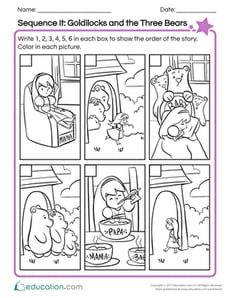
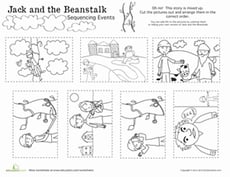
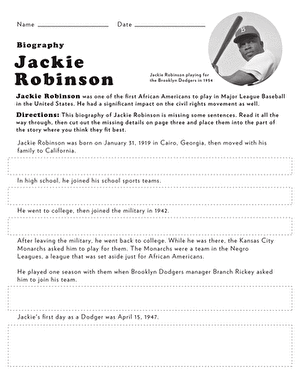
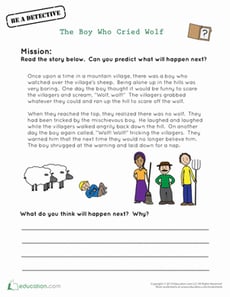
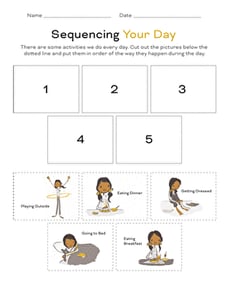
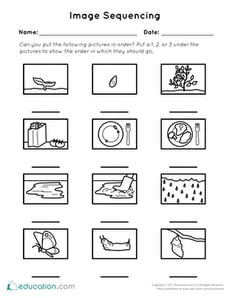
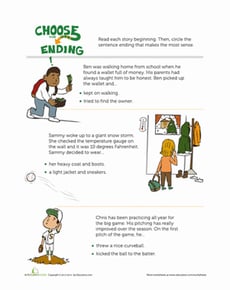
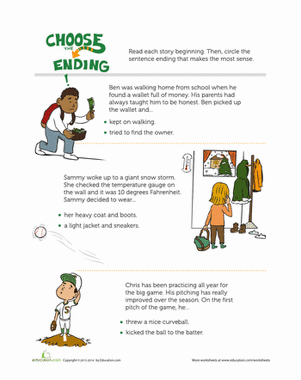
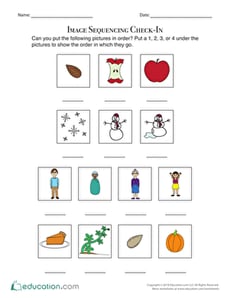
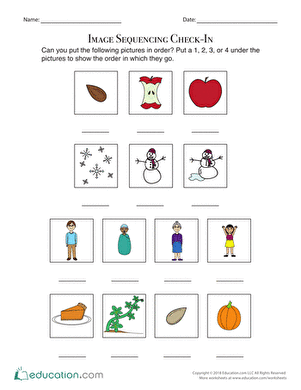
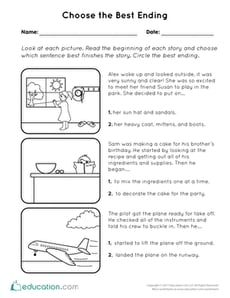
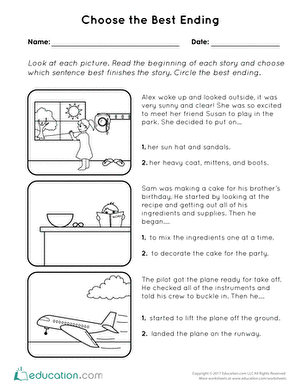
On Education.com, sequence of events worksheets help young learners practice putting events in order, understanding cause and effect, and developing storytelling skills. These materials introduce students to timelines, chronological ordering, and how events connect within narratives. Each worksheet provides structured exercises that support early literacy and critical thinking.
With printed and digital problem-solving activities, Education.com offers resources such as printable sequence charts, matching exercises, and hands-on sequencing games. These materials make it easy for teachers and parents to engage children in learning activities that build cognitive and language development during classroom or at-home lessons.
Educators and parents can use sequence of events worksheets to strengthen reading comprehension, enhance writing abilities, and encourage logical reasoning. By simplifying the process of organizing and retelling ideas, these resources save time while providing interactive ways for children to explore sequencing concepts. Students gain confidence in storytelling, preview narrative structures, and reinforce academic skills in a supportive environment.
With printed and digital problem-solving activities, Education.com offers resources such as printable sequence charts, matching exercises, and hands-on sequencing games. These materials make it easy for teachers and parents to engage children in learning activities that build cognitive and language development during classroom or at-home lessons.
Educators and parents can use sequence of events worksheets to strengthen reading comprehension, enhance writing abilities, and encourage logical reasoning. By simplifying the process of organizing and retelling ideas, these resources save time while providing interactive ways for children to explore sequencing concepts. Students gain confidence in storytelling, preview narrative structures, and reinforce academic skills in a supportive environment.