Nonfiction Sequence of Events Worksheets

5 results
English Language Arts
✕Worksheets
✕Nonfiction
✕5 results
Nonfiction Sequence of Events Worksheets
5 results
English Language Arts
✕Worksheets
✕Nonfiction
✕5 results



About Nonfiction Sequence Of Events Worksheets
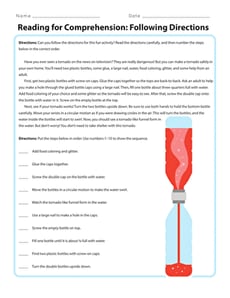
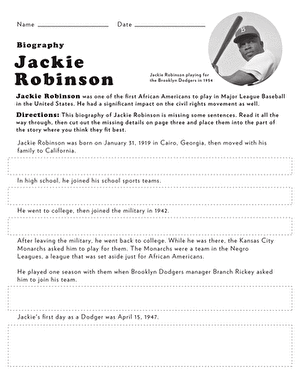
On Education.com, nonfiction sequence of events worksheets help students understand the chronological order of real-world actions by providing reading activities, timelines, and causal event tracking exercises. These worksheets are designed to strengthen reading comprehension, event recall, and analytical skills, making them ideal for classroom and home learning. They encourage students to connect concepts and observe how events lead from one to the next, fostering critical thinking and sequencing ability.
Materials such as printable lesson plans, interactive stories, and practice exercises allow educators and parents to guide learners through understanding and applying the sequence of events in nonfiction texts. Each activity breaks down complex narratives into manageable, ordered segments, aiding young readers in grasping cause-and-effect relationships and developing structured reading strategies. These resources make analyzing historical, biological, or factual material accessible and engaging for elementary students.
Educators and parents can use nonfiction sequence of events worksheets to supplement science chapters, history lessons, or geography studies by reinforcing the chronological presentation of facts. By practicing ordering information, students gain clarity in reading nonfiction, improve memory, and build foundational skills for more advanced texts. Utilizing these worksheets provides a structured, educational approach to mastering factual sequencing in fun, interactive formats.
Materials such as printable lesson plans, interactive stories, and practice exercises allow educators and parents to guide learners through understanding and applying the sequence of events in nonfiction texts. Each activity breaks down complex narratives into manageable, ordered segments, aiding young readers in grasping cause-and-effect relationships and developing structured reading strategies. These resources make analyzing historical, biological, or factual material accessible and engaging for elementary students.
Educators and parents can use nonfiction sequence of events worksheets to supplement science chapters, history lessons, or geography studies by reinforcing the chronological presentation of facts. By practicing ordering information, students gain clarity in reading nonfiction, improve memory, and build foundational skills for more advanced texts. Utilizing these worksheets provides a structured, educational approach to mastering factual sequencing in fun, interactive formats.