
Subtopics:
Editing and Revising Lesson Plans








About Editing And Revising Lesson Plans
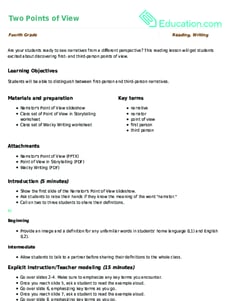
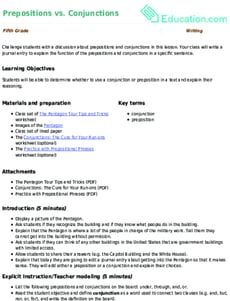
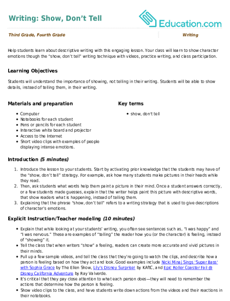
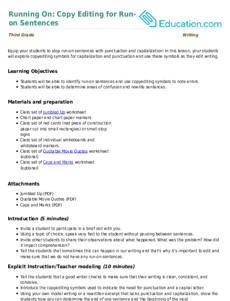
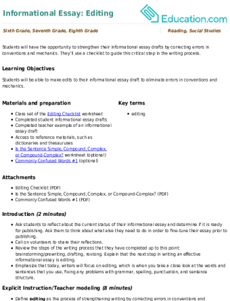
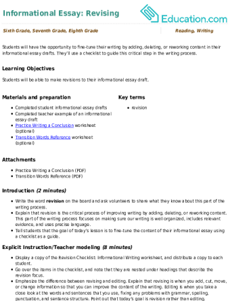
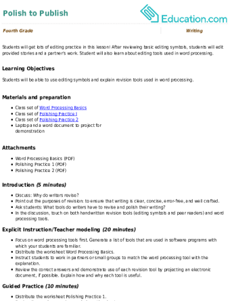
On Education.com, editing and revising lesson plans involve teaching students to improve their writing by distinguishing between revising (big-picture content, structure, clarity) and editing (grammar, spelling, punctuation). Educators use modeling, color-coding, checklists like ARMS/CUPS, and peer feedback to focus on clarity, adding details, and refining mechanics. These strategies help students develop confident, skilled writing habits. Resources such as lesson plan templates and guided exercises make it easier for teachers and parents to implement effective editing and revising instruction.
On Education.com, the lesson plans cover techniques for strengthening writing skills by incorporating editing and revising practice across content areas. Students learn to review and enhance drafts by adjusting ideas, improving organization, and polishing language. Teaching tools include printable worksheets, checksheets, and interactive activities that provide structured opportunities for practice. These resources support a variety of learners and enable educators to scaffold the writing process effectively.
Reviewing examples such as story drafts or essays, students practice editing for mechanics and revising for structural improvements. Educators can assign exercises that guide learners through editing strategies and peer review. Using clear, focused steps helps build independence and precision in writing. These practical activities foster critical thinking, attention to detail, and confidence in students' ability to craft well-structured, polished pieces.
On Education.com, the lesson plans cover techniques for strengthening writing skills by incorporating editing and revising practice across content areas. Students learn to review and enhance drafts by adjusting ideas, improving organization, and polishing language. Teaching tools include printable worksheets, checksheets, and interactive activities that provide structured opportunities for practice. These resources support a variety of learners and enable educators to scaffold the writing process effectively.
Reviewing examples such as story drafts or essays, students practice editing for mechanics and revising for structural improvements. Educators can assign exercises that guide learners through editing strategies and peer review. Using clear, focused steps helps build independence and precision in writing. These practical activities foster critical thinking, attention to detail, and confidence in students' ability to craft well-structured, polished pieces.