
Understanding Place Value Activities












About Understanding Place Value Activities
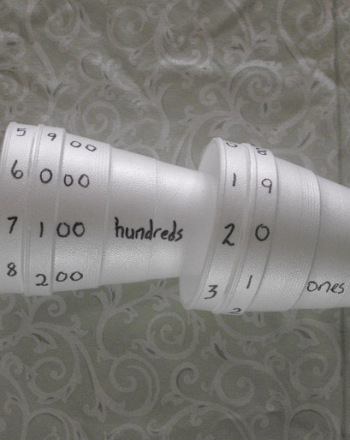
On Education.com, understanding place value activities include interactive lessons and printable worksheets that help students visualize the positions of digits in numbers. These resources use hands-on approaches like base-10 blocks, number charts, and digit manipulatives to reinforce concepts such as ones, tens, hundreds, and regrouping. Such activities make abstract mathematical ideas more concrete, engaging learners in building, comparing, and manipulating numbers. Educators and parents can use these materials to develop a strong foundation in number sense and place value concepts.
This page provides a variety of educational resources, such as interactive games, digital worksheets, and classroom lesson plans, designed to teach place value. These materials support learners in understanding expanded form, number lines, and regrouping strategies through engaging and easy-to-follow activities. By providing structured practice and visual aids, students can strengthen their mathematical understanding while maintaining interest and motivation.
Practicing dyads, groups, or one-on-one with these activities fosters collaboration and critical thinking. Teachers and parents can use structured worksheets and interactive games to tailor instruction, track progress, and reinforce key skills. Real-world scenarios, such as counting objects or using dice games, connect math concepts to practical situations, making learning both meaningful and enjoyable.
This page provides a variety of educational resources, such as interactive games, digital worksheets, and classroom lesson plans, designed to teach place value. These materials support learners in understanding expanded form, number lines, and regrouping strategies through engaging and easy-to-follow activities. By providing structured practice and visual aids, students can strengthen their mathematical understanding while maintaining interest and motivation.
Practicing dyads, groups, or one-on-one with these activities fosters collaboration and critical thinking. Teachers and parents can use structured worksheets and interactive games to tailor instruction, track progress, and reinforce key skills. Real-world scenarios, such as counting objects or using dice games, connect math concepts to practical situations, making learning both meaningful and enjoyable.