
Observations and Data Collection Activities























About Observations And Data Collection Activities
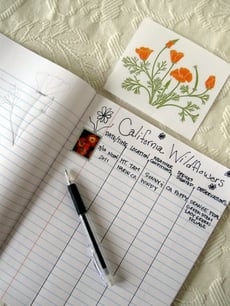
On Education.com, observations and data collection activities help students practice scientific exploration by watching, recording, and analyzing behaviors, events, or phenomena. Examples include nature journaling, structured science experiments, or worksheets that teach methods like recording data and making observations. These resources encourage attention to detail and critical thinking, fostering hands-on learning in science and everyday life.
Observation and data collection worksheets, printables, and lesson plans provide structured ways for students to document phenomena, track changes over time, and record qualitative and quantitative details. Using tools such as checklists, tables, and sensory exploration activities, children learn to observe carefully, reduce bias, and interpret information accurately. These materials combine active engagement with foundational scientific skills.
Educators and parents can use observation and data collection activities to reinforce classroom lessons or encourage active exploration at home. Structured worksheets provide a guided approach for young scientists or students developing scientific reasoning, while hands-on activities promote curiosity and experimentation. By integrating observation skills into learning, children build a strong foundation for science, math, and problem-solving.
Observation and data collection worksheets, printables, and lesson plans provide structured ways for students to document phenomena, track changes over time, and record qualitative and quantitative details. Using tools such as checklists, tables, and sensory exploration activities, children learn to observe carefully, reduce bias, and interpret information accurately. These materials combine active engagement with foundational scientific skills.
Educators and parents can use observation and data collection activities to reinforce classroom lessons or encourage active exploration at home. Structured worksheets provide a guided approach for young scientists or students developing scientific reasoning, while hands-on activities promote curiosity and experimentation. By integrating observation skills into learning, children build a strong foundation for science, math, and problem-solving.