Common Core Comparing Fractions Exercises
Common Core Quick Links:
Common Core State Standards
5 results
Math
✕Exercises
✕Common Core
✕5 results
Subtopics:
Common Core Comparing Fractions Exercises
Common Core Quick Links:
Common Core State Standards5 results
Math
✕Exercises
✕Common Core
✕5 results


About Common Core Comparing Fractions Exercises
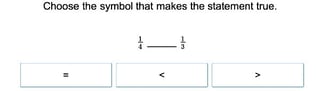
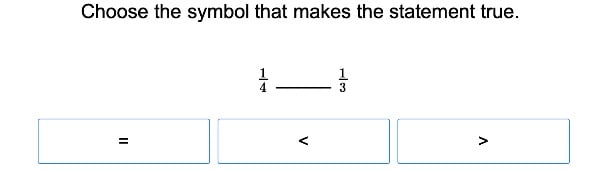
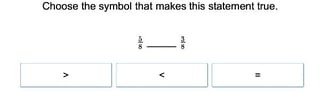
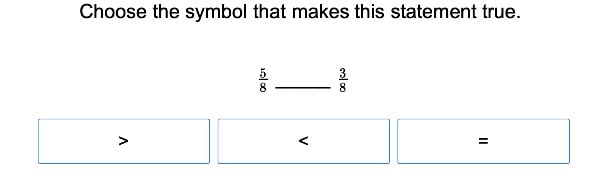
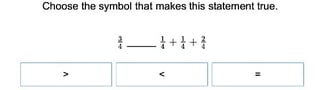
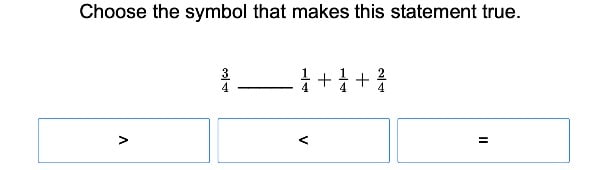
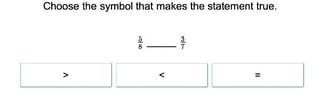
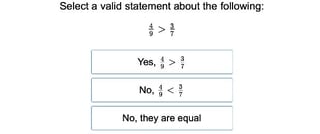
On Education.com, students can explore a variety of Materials such as printable worksheets and digital practice exercises, designed to help them compare fractions accurately. These resources include hands-on activities that use visual models, benchmarks like one-half, and identify common denominators to help students strengthen their understanding of fractions. They focus on teaching students to recognize when fractions are greater than, less than, or equal to each other, which is essential for building math literacy. Educators and parents can access prepared lesson plans and practice sheets to reinforce fraction concepts at home or in the classroom.
Children can engage with simple, guided exercises like matching fractions with visuals, filling in missing numbers, or comparing pairs of fractions. The lessons introduce key methods for comparison, such as using symbols ($>$, $=$, $<$) and understanding that all comparisons depend on fractions referring to the same whole. These tools help young learners develop number sense and confidence in fractions, supporting their progress toward more advanced math topics. With interactive yet structured teaching strategies, students can learn at their own pace while enjoying concrete examples.
Educators and parents can utilize these age-appropriate worksheets to provide structured learning and practice opportunities. The materials enable consistent reinforcement of comparing fractions, improving students' ability to evaluate relationships between numbers accurately. Using printable and digital worksheets, students can practice independently or as part of guided lessons. These resources also help educators monitor progress and identify areas where students might need additional support.
Children can engage with simple, guided exercises like matching fractions with visuals, filling in missing numbers, or comparing pairs of fractions. The lessons introduce key methods for comparison, such as using symbols ($>$, $=$, $<$) and understanding that all comparisons depend on fractions referring to the same whole. These tools help young learners develop number sense and confidence in fractions, supporting their progress toward more advanced math topics. With interactive yet structured teaching strategies, students can learn at their own pace while enjoying concrete examples.
Educators and parents can utilize these age-appropriate worksheets to provide structured learning and practice opportunities. The materials enable consistent reinforcement of comparing fractions, improving students' ability to evaluate relationships between numbers accurately. Using printable and digital worksheets, students can practice independently or as part of guided lessons. These resources also help educators monitor progress and identify areas where students might need additional support.