
Kindergarten Observations and Data Collection Resources




























About Kindergarten Observations And Data Collection Resources
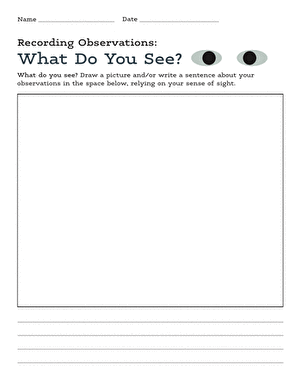
On Education.com, this page provides resources for observing and collecting data in early childhood education. These materials include printable observation forms, chart templates, and guides to help educators and parents document developmental progress. By using structured observation tools, adults can track students’ skills in areas such as communication, motor development, social interactions, and cognitive abilities. This approach encourages meaningful assessment while supporting personalized instruction and tracking growth over time.
Educators and parents can access a variety of observation worksheets, printable templates, and digital tools to support tracking children’s progress in structured and engaging ways. These resources are designed to make documenting observations more organized and accessible, allowing for effective record-keeping and analysis. Structured observation activities can enhance planning, classroom management, and understanding of each child's unique strengths and challenges. Using organized observation methods helps ensure assessments are comprehensive and timely.
By utilizing the observation and data collection resources on Education.com, teachers and parents can save time by providing ready-to-use forms that streamline documentation and analysis processes. Observations assist in identifying learning patterns, guiding curriculum adjustments, and tracking developmental milestones. These materials support ongoing assessment that is integrated into daily activities, making them practical tools for classroom and at-home learning.
Educators and parents can access a variety of observation worksheets, printable templates, and digital tools to support tracking children’s progress in structured and engaging ways. These resources are designed to make documenting observations more organized and accessible, allowing for effective record-keeping and analysis. Structured observation activities can enhance planning, classroom management, and understanding of each child's unique strengths and challenges. Using organized observation methods helps ensure assessments are comprehensive and timely.
By utilizing the observation and data collection resources on Education.com, teachers and parents can save time by providing ready-to-use forms that streamline documentation and analysis processes. Observations assist in identifying learning patterns, guiding curriculum adjustments, and tracking developmental milestones. These materials support ongoing assessment that is integrated into daily activities, making them practical tools for classroom and at-home learning.