
Measuring Angles Resources
36 results
Math
✕Sort by:
36 results
Sort by:
































About Measuring Angles Resources
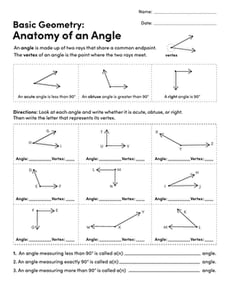
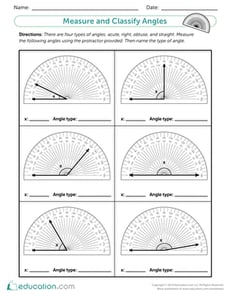
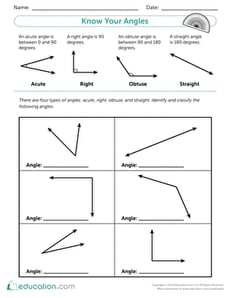
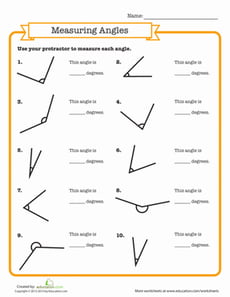
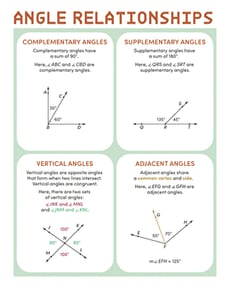
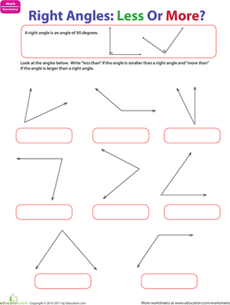
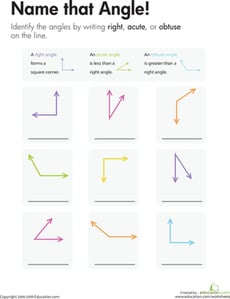
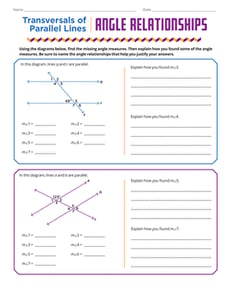
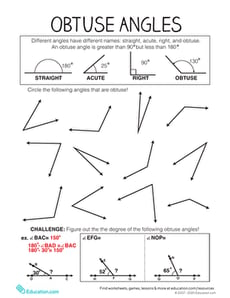
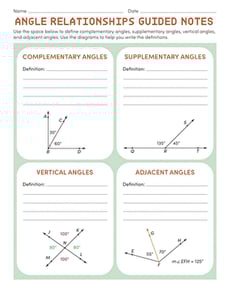
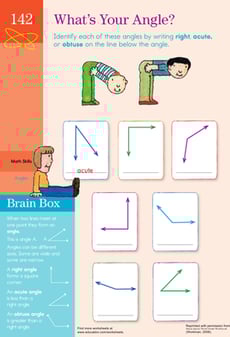
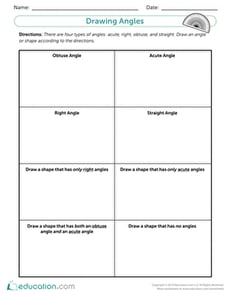
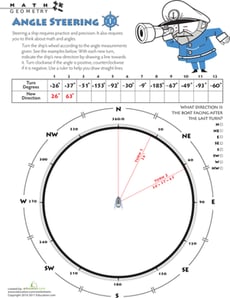
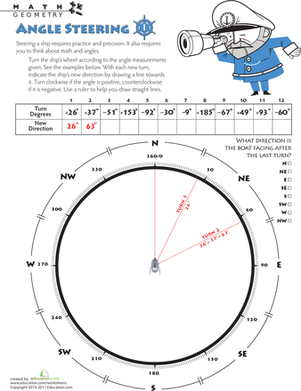
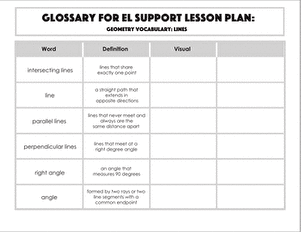
On Education.com, measuring angles involves using a protractor to identify and quantify angles in shapes and diagrams. This includes understanding how to align the protractor’s center with the vertex, position the baseline along one ray, and read the degree measure where the other ray crosses the scale. Resources like practice worksheets, tutorials, and interactive activities help students and teachers develop skills in measuring and identifying various angle types such as acute, right, obtuse, and reflex angles. These materials make learning geometry more accessible and hands-on.
By browsing provided materials, educators and parents can access digital lesson plans, scaffolded practice exercises, and engaging games that reinforce measurement strategies. These resources support understanding of concepts like angle classification, combining measurements, and solving problems involving angles. Through visual examples and step-by-step guidance, learners can build confidence and accuracy with protractor use, laying the foundation for advanced geometry.
Using these educational tools saves time for teachers and parents by providing ready-made worksheets, interactive challenges, and structured activities to reinforce angle measurement skills. Students can practice independently or work collaboratively to grasp concepts and sharpen spatial reasoning. Once familiar with measuring with a protractor, learners are equipped to approach more complex geometry problems with confidence.
By browsing provided materials, educators and parents can access digital lesson plans, scaffolded practice exercises, and engaging games that reinforce measurement strategies. These resources support understanding of concepts like angle classification, combining measurements, and solving problems involving angles. Through visual examples and step-by-step guidance, learners can build confidence and accuracy with protractor use, laying the foundation for advanced geometry.
Using these educational tools saves time for teachers and parents by providing ready-made worksheets, interactive challenges, and structured activities to reinforce angle measurement skills. Students can practice independently or work collaboratively to grasp concepts and sharpen spatial reasoning. Once familiar with measuring with a protractor, learners are equipped to approach more complex geometry problems with confidence.