Scavenger Hunt Science Resources

Subtopics:
Scavenger Hunt Science Resources
5 results
Science
✕Scavenger Hunt
✕5 results



About Scavenger Hunt Science Resources
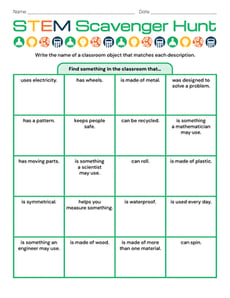
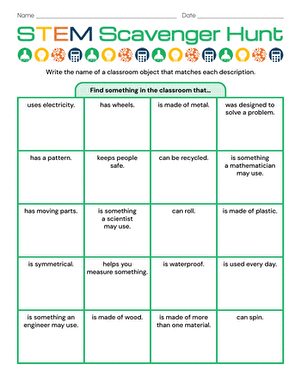
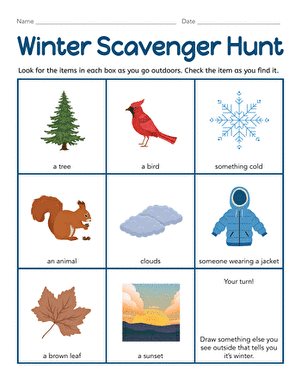
On Education.com, scavenger hunt science resources provide engaging activities that help students explore scientific concepts through hands-on learning. These materials include printable worksheets, observation charts, and guided experiments that make science fun and accessible for young learners. By incorporating outdoor exploration and interactive tasks, educators and parents can foster curiosity and reinforce classroom lessons.
The resources on Education.com include a variety of scavenger hunt activities that introduce students to topics like plants, animals, weather, or simple machines. These resources are designed to promote critical thinking and observation skills while encouraging active participation in learning. Materials can be personalized for different grade levels, from early elementary to middle school, providing flexible options for seasonal or thematic science lessons.
Browsing scavenger hunt science resources on Education.com enables educators and parents to organize ready-to-go lessons, saving planning time while creating memorable learning experiences. These resources support experiential education, introduce scientific inquiry, and enhance engagement with science topics through structured outdoor and classroom activities. By using these resources, learners develop a stronger connection to the natural world and scientific principles.
The resources on Education.com include a variety of scavenger hunt activities that introduce students to topics like plants, animals, weather, or simple machines. These resources are designed to promote critical thinking and observation skills while encouraging active participation in learning. Materials can be personalized for different grade levels, from early elementary to middle school, providing flexible options for seasonal or thematic science lessons.
Browsing scavenger hunt science resources on Education.com enables educators and parents to organize ready-to-go lessons, saving planning time while creating memorable learning experiences. These resources support experiential education, introduce scientific inquiry, and enhance engagement with science topics through structured outdoor and classroom activities. By using these resources, learners develop a stronger connection to the natural world and scientific principles.