
Nonfiction Sequence of Events Resources









About Nonfiction Sequence Of Events Resources
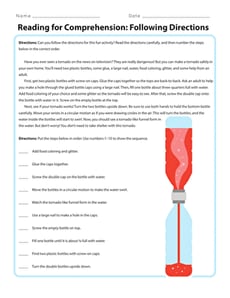
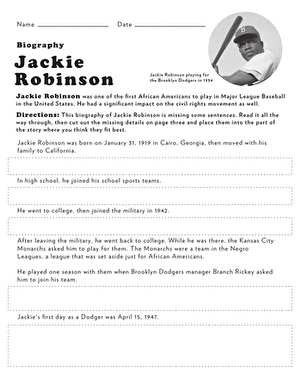
On Education.com, nonfiction sequence of events resources include worksheets, printable activities, and lesson plans that help students identify the order in which events happen in texts. These resources teach children to recognize signal words like first, next, and then, and analyze how events are organized. They support reading comprehension by mapping out steps in stories, historical timelines, or scientific processes, allowing learners to better understand and remember the sequence of events.
Parents and teachers can access a variety of activities on Education.com that provide structured practice for sequencing skills. These include interactive worksheets, story strip printables, and sequencing charts that guide students to arrange events in logical order. Each resource offers engaging ways to build reading fluency, strengthen critical thinking, and support comprehension across multiple subjects.
Using these sequence of events materials at home or in the classroom saves time by providing ready-to-use activities that reinforce key reading skills. Educators and parents can use these resources to create consistent practice, track progress, and facilitate discussions about causality and story structure. This makes learning more efficient, enjoyable, and effective for students working with fiction, nonfiction, and multimedia texts.
Parents and teachers can access a variety of activities on Education.com that provide structured practice for sequencing skills. These include interactive worksheets, story strip printables, and sequencing charts that guide students to arrange events in logical order. Each resource offers engaging ways to build reading fluency, strengthen critical thinking, and support comprehension across multiple subjects.
Using these sequence of events materials at home or in the classroom saves time by providing ready-to-use activities that reinforce key reading skills. Educators and parents can use these resources to create consistent practice, track progress, and facilitate discussions about causality and story structure. This makes learning more efficient, enjoyable, and effective for students working with fiction, nonfiction, and multimedia texts.