SKIP TO CONTENT
Worksheet Generator
Subjects
Grades
Worksheets
Games
Build a Worksheet
More Resources
Roly Recommends
Subjects
Grades
Worksheets
Games
Build a Worksheet
More Resources
Roly Recommends
Lesson Plans for 'fiction' : Page 2
Filters
176 results
Search for: fiction
✕
Lesson Plans
✕
Clear all
176 results
Filters
Search for: fiction
✕
Lesson Plans
✕
Subjects
Math
English Language Arts
Science
Grade Level
Pre-K
K
1st
2nd
3rd
4th
5th
6th
7th
8th
Early Childhood
Elementary School
Middle School
Resource Type
Worksheets
Games
Lesson Plans
Interactive Worksheets
Workbooks
Activities
Stories
Songs
Offline Games
Teacher Resources
Common Core
Yes
English Language Support
Yes
Clear all
View 176 results
Lesson Plans for 'fiction' : Page 2
Filters
176 results
Search for: fiction
✕
Lesson Plans
✕
Clear all
176 results
Is It the Same?
Lesson Plan
Is It the Same?
Kindergarten
Vocabulary
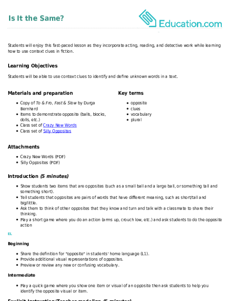
Students will enjoy this fast-paced lesson as they incorporate acting, reading, and detective work while learning how to use context clues in fiction.
Lesson Plan
Is It the Same?
Lesson Plan
Is It the Same?
Students will enjoy this fast-paced lesson as they incorporate acting, reading, and detective work while learning how to use context clues in fiction.
Kindergarten
Vocabulary
Lesson Plan
Fairy Tales: Identifying Story Elements
Lesson Plan
Fairy Tales: Identifying Story Elements
Second Grade
Reading
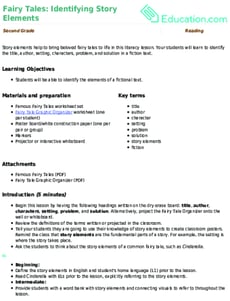
Story elements help to bring beloved fairy tales to life in this literacy lesson. Your students will learn to identify the title, author, setting, characters, problem, and solution in a fiction text.
Lesson Plan
Fairy Tales: Identifying Story Elements
Lesson Plan
Fairy Tales: Identifying Story Elements
Story elements help to bring beloved fairy tales to life in this literacy lesson. Your students will learn to identify the title, author, setting, characters, problem, and solution in a fiction text.
Second Grade
Reading
Lesson Plan
Fluency and Comprehension Boot Camp!
Lesson Plan
Fluency and Comprehension Boot Camp!
Fifth Grade
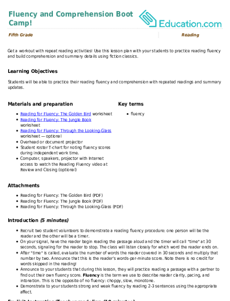
Get a workout with repeat reading activities! Use this lesson plan with your students to practice reading fluency and build comprehension and summary details using fiction classics.
Lesson Plan
Fluency and Comprehension Boot Camp!
Lesson Plan
Fluency and Comprehension Boot Camp!
Get a workout with repeat reading activities! Use this lesson plan with your students to practice reading fluency and build comprehension and summary details using fiction classics.
Fifth Grade
Lesson Plan
EL
Who are the Key Characters?
Lesson Plan
Who are the Key Characters?
First Grade
Use this fun theatrical lesson plan to help your students identify key characters and events in fiction stories. This can be used as a stand alone or support lesson for the Play it Again lesson plan.
Lesson Plan
EL
Who are the Key Characters?
Lesson Plan
Who are the Key Characters?
Use this fun theatrical lesson plan to help your students identify key characters and events in fiction stories. This can be used as a stand alone or support lesson for the Play it Again lesson plan.
First Grade
Lesson Plan
EL
Compare & Contrast Pictures
Lesson Plan
Compare & Contrast Pictures
First Grade
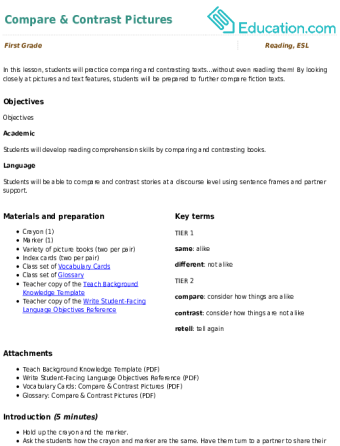
In this lesson, students will practice comparing and contrasting texts...without even reading them! By looking closely at pictures and text features, students will be prepared to further compare fiction texts.
Lesson Plan
EL
Compare & Contrast Pictures
Lesson Plan
Compare & Contrast Pictures
In this lesson, students will practice comparing and contrasting texts...without even reading them! By looking closely at pictures and text features, students will be prepared to further compare fiction texts.
First Grade
Lesson Plan
EL
Who Is Telling the Story?
Lesson Plan
Who Is Telling the Story?
Fourth Grade
Help your ELs see the connection between nouns and pronouns and the author's point of view, or perspective, in fiction and nonfiction texts. This lesson can be taught on its own or used as support for the lesson Two Points of View.
Lesson Plan
EL
Who Is Telling the Story?
Lesson Plan
Who Is Telling the Story?
Help your ELs see the connection between nouns and pronouns and the author's point of view, or perspective, in fiction and nonfiction texts. This lesson can be taught on its own or used as support for the lesson Two Points of View.
Fourth Grade
Lesson Plan
EL
Words That Show Cause and Effect
Lesson Plan
Words That Show Cause and Effect
Fourth Grade
This lesson helps students recognize cause-and-effect relationships in fiction and nonfiction writing by identifying clue words. It can be used on its own or as a precursor to Cause and Effect with Comic Strips.
Lesson Plan
EL
Words That Show Cause and Effect
Lesson Plan
Words That Show Cause and Effect
This lesson helps students recognize cause-and-effect relationships in fiction and nonfiction writing by identifying clue words. It can be used on its own or as a precursor to Cause and Effect with Comic Strips.
Fourth Grade
Lesson Plan
Literary Vocabulary, Understanding Plot Lesson Part I
Lesson Plan
Literary Vocabulary, Understanding Plot Lesson Part I
Fourth Grade
Have you ever imagined the action and imagery used in conflict during fantasy fiction novels? Using an Education.com workbook, students will learn the vocabulary of literature and complete a crossword puzzle.
Lesson Plan
Literary Vocabulary, Understanding Plot Lesson Part I
Lesson Plan
Literary Vocabulary, Understanding Plot Lesson Part I
Have you ever imagined the action and imagery used in conflict during fantasy fiction novels? Using an Education.com workbook, students will learn the vocabulary of literature and complete a crossword puzzle.
Fourth Grade
Lesson Plan
Middle Atlantic State Migration
Lesson Plan
Middle Atlantic State Migration
Fourth Grade
Reading
In this lesson, your students will use guiding questions as a way to organize their thoughts about non-fiction reading. They will also gain an understanding of some of the factors that led to the colonization of the Middle Atlantic States.
Lesson Plan
Middle Atlantic State Migration
Lesson Plan
Middle Atlantic State Migration
In this lesson, your students will use guiding questions as a way to organize their thoughts about non-fiction reading. They will also gain an understanding of some of the factors that led to the colonization of the Middle Atlantic States.
Fourth Grade
Reading
Lesson Plan
Find ‘Em and Quote ‘Em! Facts and Opinions
Lesson Plan
Find ‘Em and Quote ‘Em! Facts and Opinions
Fifth Grade
Reading
Got facts? Got opinions? Use this lesson plan to teach your students to evaluate texts for facts and opinions. Students will use a non-fiction text selection to collect quotes as proof.
Lesson Plan
Find ‘Em and Quote ‘Em! Facts and Opinions
Lesson Plan
Find ‘Em and Quote ‘Em! Facts and Opinions
Got facts? Got opinions? Use this lesson plan to teach your students to evaluate texts for facts and opinions. Students will use a non-fiction text selection to collect quotes as proof.
Fifth Grade
Reading
Lesson Plan
EL
Scary Story Elements
Lesson Plan
Scary Story Elements
Fourth Grade
Reading
In this lesson, students will use conjunctions to compare and contrast scary stories. It can be taught independently or used as a pre-lesson to Using Story Elements to Compare and Contrast Fiction Texts.
Lesson Plan
EL
Scary Story Elements
Lesson Plan
Scary Story Elements
In this lesson, students will use conjunctions to compare and contrast scary stories. It can be taught independently or used as a pre-lesson to Using Story Elements to Compare and Contrast Fiction Texts.
Fourth Grade
Reading
Lesson Plan
Questions that Gauge Comprehension
Lesson Plan
Questions that Gauge Comprehension
Third Grade
Vocabulary
Use this lesson to gauge your students’ basic comprehension of fiction text. If they can answer who, what, when, where, why, and how questions, you know they have a handle on it and it’s time to get into more critical thinking!
Lesson Plan
Questions that Gauge Comprehension
Lesson Plan
Questions that Gauge Comprehension
Use this lesson to gauge your students’ basic comprehension of fiction text. If they can answer who, what, when, where, why, and how questions, you know they have a handle on it and it’s time to get into more critical thinking!
Third Grade
Vocabulary
Lesson Plan
EL
Cause or Effect?
Lesson Plan
Cause or Effect?
Third Grade
Use this lesson to help your ELs understand the relationship between cause and the effect sentences. It can be a stand-alone lesson or a support lesson to the Fiction Comprehension: Cause and Effect lesson.
Lesson Plan
EL
Cause or Effect?
Lesson Plan
Cause or Effect?
Use this lesson to help your ELs understand the relationship between cause and the effect sentences. It can be a stand-alone lesson or a support lesson to the Fiction Comprehension: Cause and Effect lesson.
Third Grade
Lesson Plan
EL
Summarize a Nonfiction Text
Lesson Plan
Summarize a Nonfiction Text
Second Grade
Writing
Use this lesson to help your ELs understand how to write effective nonfiction text summaries. It can be a stand-alone lesson or a support lesson to the Create a Non-fiction Text Summary lesson plan.
Lesson Plan
EL
Summarize a Nonfiction Text
Lesson Plan
Summarize a Nonfiction Text
Use this lesson to help your ELs understand how to write effective nonfiction text summaries. It can be a stand-alone lesson or a support lesson to the Create a Non-fiction Text Summary lesson plan.
Second Grade
Writing
Lesson Plan
EL
What Was the Problem?
Lesson Plan
What Was the Problem?
Third Grade
Use this lesson to teach your students to use the correct past tense language when speaking about a story they have read. This lesson can stand alone or be used as a pre-lesson for the
Fiction Comprehension: Problem and Solution
lesson.
Lesson Plan
EL
What Was the Problem?
Lesson Plan
What Was the Problem?
Use this lesson to teach your students to use the correct past tense language when speaking about a story they have read. This lesson can stand alone or be used as a pre-lesson for the
Fiction Comprehension: Problem and Solution
lesson.
Third Grade
Lesson Plan
EL
Figuring Out the Theme
Lesson Plan
Figuring Out the Theme
Fourth Grade
Most stories have a message for the reader! Help students determine a story's theme so that kids are prepared to compare stories with similar themes. Use this on its own or as support to the lesson Head to Head Fiction Reflections.
Lesson Plan
EL
Figuring Out the Theme
Lesson Plan
Figuring Out the Theme
Most stories have a message for the reader! Help students determine a story's theme so that kids are prepared to compare stories with similar themes. Use this on its own or as support to the lesson Head to Head Fiction Reflections.
Fourth Grade
Lesson Plan
EL
Main ideas and Details
Lesson Plan
Main ideas and Details
Third Grade
Writing
Use this lesson to help your ELs understand main idea and supporting details. They'll analyze non-fiction word, sentence, and paragraph structures. It can be a stand-alone lesson or a support lesson to the In Search of Main Ideas lesson.
Lesson Plan
EL
Main ideas and Details
Lesson Plan
Main ideas and Details
Use this lesson to help your ELs understand main idea and supporting details. They'll analyze non-fiction word, sentence, and paragraph structures. It can be a stand-alone lesson or a support lesson to the In Search of Main Ideas lesson.
Third Grade
Writing
Lesson Plan
Author Study: Jacqueline Woodson
Lesson Plan
Author Study: Jacqueline Woodson
Third Grade
Reading
Students will use their understanding of plot, theme, and comparing and contrasting in this lesson that teaches about an award-winning African American author, Jacqueline Woodson. Students will read some of her fiction books and compare and contrast the stories. They'll also discuss what they think makes Jacqueline Woodson an award-winning author.
Lesson Plan
Author Study: Jacqueline Woodson
Lesson Plan
Author Study: Jacqueline Woodson
Students will use their understanding of plot, theme, and comparing and contrasting in this lesson that teaches about an award-winning African American author, Jacqueline Woodson. Students will read some of her fiction books and compare and contrast the stories. They'll also discuss what they think makes Jacqueline Woodson an award-winning author.
Third Grade
Reading
Lesson Plan
Third Grade Daily Sub Plan B
Lesson Plan
Third Grade Daily Sub Plan B
Third Grade
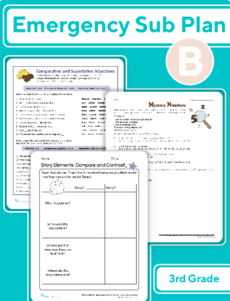
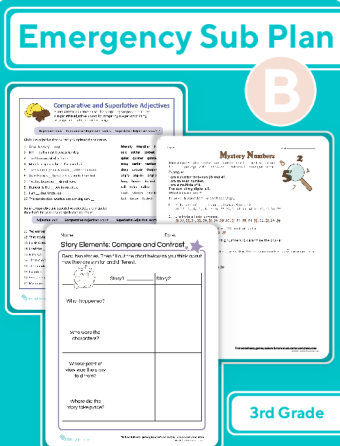
Set your classroom up for success with this daily sub plan featuring lessons, worksheets, and activities! This resource is a great way to prepare for a substitute in your classroom. Your substitute can keep your third graders learning in your absence by using this packet of material. This teaching resource highlights fiction comprehension, creative writing, social studies skills, and math challenges.
Lesson Plan
Third Grade Daily Sub Plan B
Lesson Plan
Third Grade Daily Sub Plan B
Set your classroom up for success with this daily sub plan featuring lessons, worksheets, and activities! This resource is a great way to prepare for a substitute in your classroom. Your substitute can keep your third graders learning in your absence by using this packet of material. This teaching resource highlights fiction comprehension, creative writing, social studies skills, and math challenges.
Third Grade
Lesson Plan
EL
Sorting & Describing Books
Lesson Plan
Sorting & Describing Books
First Grade
In this lesson, students will look at picture clues to determine the topic of texts. ELs will build vocabulary and language skills by working with partners to discuss and represent texts using drawings.
Lesson Plan
EL
Sorting & Describing Books
Lesson Plan
Sorting & Describing Books
In this lesson, students will look at picture clues to determine the topic of texts. ELs will build vocabulary and language skills by working with partners to discuss and represent texts using drawings.
First Grade
Lesson Plan
EL
Real or Not?
Lesson Plan
Real or Not?
Pre-K
Life Science
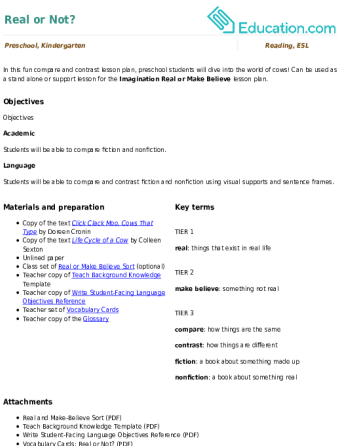
In this fun compare and contrast lesson plan, preschool students will dive into the world of cows! Can be used as a stand alone or support lesson for the
Imagination Real or Make Believe
lesson plan.
Lesson Plan
EL
Real or Not?
Lesson Plan
Real or Not?
In this fun compare and contrast lesson plan, preschool students will dive into the world of cows! Can be used as a stand alone or support lesson for the
Imagination Real or Make Believe
lesson plan.
Pre-K
Life Science
Lesson Plan
Reading Inventories
Lesson Plan
Reading Inventories
First Grade
Want to engage students in reading? Give them books that they want to read! This lesson will give you a chance to learn about your readers so that you can best support them to become fluent readers.
Lesson Plan
Reading Inventories
Lesson Plan
Reading Inventories
Want to engage students in reading? Give them books that they want to read! This lesson will give you a chance to learn about your readers so that you can best support them to become fluent readers.
First Grade
Lesson Plan
EL
Early Literacy Concepts: Parts of a Book
Lesson Plan
Early Literacy Concepts: Parts of a Book
Kindergarten
Reading
In this fun literacy lesson, your ELs will get to review or learn all about the parts of a book! This can be a stand alone or support lesson for the lesson What We Like About Stories.
Lesson Plan
EL
Early Literacy Concepts: Parts of a Book
Lesson Plan
Early Literacy Concepts: Parts of a Book
In this fun literacy lesson, your ELs will get to review or learn all about the parts of a book! This can be a stand alone or support lesson for the lesson What We Like About Stories.
Kindergarten
Reading
Lesson Plan
How Many Features?
Lesson Plan
How Many Features?
Second Grade
Reading
What’s the deal with all of those text features? Use this handy lesson plan to help your second graders answer that very question.
Lesson Plan
How Many Features?
Lesson Plan
How Many Features?
What’s the deal with all of those text features? Use this handy lesson plan to help your second graders answer that very question.
Second Grade
Reading
Lesson Plan
Are You a Text Detective?
Lesson Plan
Are You a Text Detective?
Pre-K
Kindergarten students will become text feature detectives as they hunt for the different text features found in nonfiction books in this fun reading lesson.
Lesson Plan
Are You a Text Detective?
Lesson Plan
Are You a Text Detective?
Kindergarten students will become text feature detectives as they hunt for the different text features found in nonfiction books in this fun reading lesson.
Pre-K
Lesson Plan
EL
Reading Goals
Lesson Plan
Reading Goals
Pre-K
Reading
Are your students emerging readers? Use this literacy-focused lesson plan to set summer reading goals and help your students express their opinions about books. Can be used as a stand-alone or support lesson for the
Summer Reads
lesson plan.
Lesson Plan
EL
Reading Goals
Lesson Plan
Reading Goals
Are your students emerging readers? Use this literacy-focused lesson plan to set summer reading goals and help your students express their opinions about books. Can be used as a stand-alone or support lesson for the
Summer Reads
lesson plan.
Pre-K
Reading
Lesson Plan
Analyzing Text Features
Lesson Plan
Analyzing Text Features
First Grade
Want students to use text features in their writing? Begin by having them examine the text features that they see in informational books.
Lesson Plan
Analyzing Text Features
Lesson Plan
Analyzing Text Features
Want students to use text features in their writing? Begin by having them examine the text features that they see in informational books.
First Grade
Lesson Plan
EL
Going on a Picture Walk
Lesson Plan
Going on a Picture Walk
Pre-K
Use this helpful introduction to going on a picture walk and making predictions as a stand alone or pre lesson for the
Reading Without Words
lesson plan.
Lesson Plan
EL
Going on a Picture Walk
Lesson Plan
Going on a Picture Walk
Use this helpful introduction to going on a picture walk and making predictions as a stand alone or pre lesson for the
Reading Without Words
lesson plan.
Pre-K
Lesson Plan
Character Detectives
Lesson Plan
Character Detectives
First Grade
Writing
Your students will learn all about what makes a fictional character special when they become character detectives! Use this lesson to introduce the concept of using key details from a text to gather information.
Lesson Plan
Character Detectives
Lesson Plan
Character Detectives
Your students will learn all about what makes a fictional character special when they become character detectives! Use this lesson to introduce the concept of using key details from a text to gather information.
First Grade
Writing
Lesson Plan
Presidential Pets
Lesson Plan
Presidential Pets
Fourth Grade
Writing
Holy cow! Did President George W. Bush really have a longhorn named Ofelia as a pet? Students learn about wacky White House pets in this fun research activity that includes “president interviews” and a pet choice writing page.
Lesson Plan
Presidential Pets
Lesson Plan
Presidential Pets
Holy cow! Did President George W. Bush really have a longhorn named Ofelia as a pet? Students learn about wacky White House pets in this fun research activity that includes “president interviews” and a pet choice writing page.
Fourth Grade
Writing
Lesson Plan
1
2
3
4
5
6