SKIP TO CONTENT
Worksheet Generator
Subjects
Grades
Worksheets
Games
Build a Worksheet
More Resources
Roly Recommends
Subjects
Grades
Worksheets
Games
Build a Worksheet
More Resources
Roly Recommends
3rd Grade Lesson Plans for 'fiction'
Filters
29 results
Search for: fiction
✕
Lesson Plans
✕
3rd Grade
✕
Clear all
29 results
Filters
Search for: fiction
✕
Lesson Plans
✕
3rd Grade
✕
Subjects
Math
English Language Arts
Grade Level
Pre-K
K
1st
2nd
3rd
4th
5th
6th
7th
8th
Early Childhood
Elementary School
Middle School
Resource Type
Worksheets
Lesson Plans
Interactive Worksheets
Workbooks
Activities
Teacher Resources
Common Core
Yes
English Language Support
Yes
Clear all
View 29 results
3rd Grade Lesson Plans for 'fiction'
Filters
29 results
Search for: fiction
✕
Lesson Plans
✕
3rd Grade
✕
Clear all
29 results
Summary Raceway: Summarizing Fiction
Lesson Plan
Summary Raceway: Summarizing Fiction
Third Grade
Writing
Start Your Engines! It's time to teach your students how to summarize fiction text as you race down Summary Raceway.
Lesson Plan
Summary Raceway: Summarizing Fiction
Lesson Plan
Summary Raceway: Summarizing Fiction
Start Your Engines! It's time to teach your students how to summarize fiction text as you race down Summary Raceway.
Third Grade
Writing
Lesson Plan
Fiction Comprehension: Problem and Solution
Lesson Plan
Fiction Comprehension: Problem and Solution
Third Grade
If you've ever had something go wrong, you know how it feels to search for a solution! Use this lesson to teach your students to identify problems and solutions in fictional text.
Lesson Plan
Fiction Comprehension: Problem and Solution
Lesson Plan
Fiction Comprehension: Problem and Solution
If you've ever had something go wrong, you know how it feels to search for a solution! Use this lesson to teach your students to identify problems and solutions in fictional text.
Third Grade
Lesson Plan
Fiction Comprehension: Cause and Effect
Lesson Plan
Fiction Comprehension: Cause and Effect
Third Grade
Improve reading comprehension with a lesson on cause and effect! In this lesson, students will use a T-chart to identify examples of cause and effect in and by the end, you’ll all be singing along to the cause and effect song!
Lesson Plan
Fiction Comprehension: Cause and Effect
Lesson Plan
Fiction Comprehension: Cause and Effect
Improve reading comprehension with a lesson on cause and effect! In this lesson, students will use a T-chart to identify examples of cause and effect in and by the end, you’ll all be singing along to the cause and effect song!
Third Grade
Lesson Plan
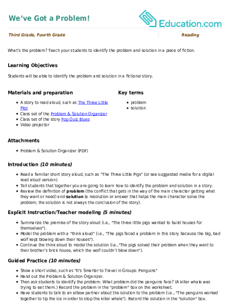
We’ve Got a Problem!
Lesson Plan
We’ve Got a Problem!
Third Grade
What’s the problem? Teach your students to identify the problem and solution in a piece of fiction.
Lesson Plan
We’ve Got a Problem!
Lesson Plan
We’ve Got a Problem!
What’s the problem? Teach your students to identify the problem and solution in a piece of fiction.
Third Grade
Lesson Plan
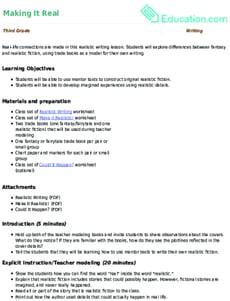
Making It Real
Lesson Plan
Making It Real
Third Grade
Real-life connections are made in this realistic writing lesson. Students will explore differences between fantasy and realistic fiction, using trade books as a model for their own writing.
Lesson Plan
Making It Real
Lesson Plan
Making It Real
Real-life connections are made in this realistic writing lesson. Students will explore differences between fantasy and realistic fiction, using trade books as a model for their own writing.
Third Grade
Lesson Plan
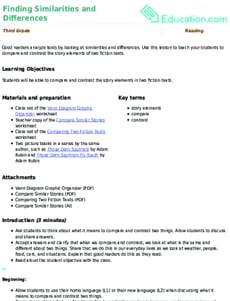
Finding Similarities and Differences
Lesson Plan
Finding Similarities and Differences
Third Grade
Reading
Good readers analyze texts by looking at similarities and differences. Use this lesson to teach your students to compare and contrast the story elements of two fiction texts.
Lesson Plan
Finding Similarities and Differences
Lesson Plan
Finding Similarities and Differences
Good readers analyze texts by looking at similarities and differences. Use this lesson to teach your students to compare and contrast the story elements of two fiction texts.
Third Grade
Reading
Lesson Plan
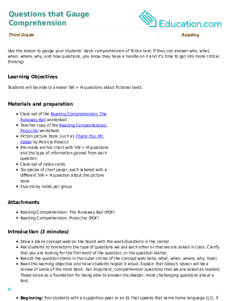
Questions that Gauge Comprehension
Lesson Plan
Questions that Gauge Comprehension
Third Grade
Vocabulary
Use this lesson to gauge your students’ basic comprehension of fiction text. If they can answer who, what, when, where, why, and how questions, you know they have a handle on it and it’s time to get into more critical thinking!
Lesson Plan
Questions that Gauge Comprehension
Lesson Plan
Questions that Gauge Comprehension
Use this lesson to gauge your students’ basic comprehension of fiction text. If they can answer who, what, when, where, why, and how questions, you know they have a handle on it and it’s time to get into more critical thinking!
Third Grade
Vocabulary
Lesson Plan
EL
Cause or Effect?
Lesson Plan
Cause or Effect?
Third Grade
Use this lesson to help your ELs understand the relationship between cause and the effect sentences. It can be a stand-alone lesson or a support lesson to the Fiction Comprehension: Cause and Effect lesson.
Lesson Plan
EL
Cause or Effect?
Lesson Plan
Cause or Effect?
Use this lesson to help your ELs understand the relationship between cause and the effect sentences. It can be a stand-alone lesson or a support lesson to the Fiction Comprehension: Cause and Effect lesson.
Third Grade
Lesson Plan
EL
What Was the Problem?
Lesson Plan
What Was the Problem?
Third Grade
Use this lesson to teach your students to use the correct past tense language when speaking about a story they have read. This lesson can stand alone or be used as a pre-lesson for the
Fiction Comprehension: Problem and Solution
lesson.
Lesson Plan
EL
What Was the Problem?
Lesson Plan
What Was the Problem?
Use this lesson to teach your students to use the correct past tense language when speaking about a story they have read. This lesson can stand alone or be used as a pre-lesson for the
Fiction Comprehension: Problem and Solution
lesson.
Third Grade
Lesson Plan
EL
Main ideas and Details
Lesson Plan
Main ideas and Details
Third Grade
Writing
Use this lesson to help your ELs understand main idea and supporting details. They'll analyze non-fiction word, sentence, and paragraph structures. It can be a stand-alone lesson or a support lesson to the In Search of Main Ideas lesson.
Lesson Plan
EL
Main ideas and Details
Lesson Plan
Main ideas and Details
Use this lesson to help your ELs understand main idea and supporting details. They'll analyze non-fiction word, sentence, and paragraph structures. It can be a stand-alone lesson or a support lesson to the In Search of Main Ideas lesson.
Third Grade
Writing
Lesson Plan
Author Study: Jacqueline Woodson
Lesson Plan
Author Study: Jacqueline Woodson
Third Grade
Reading
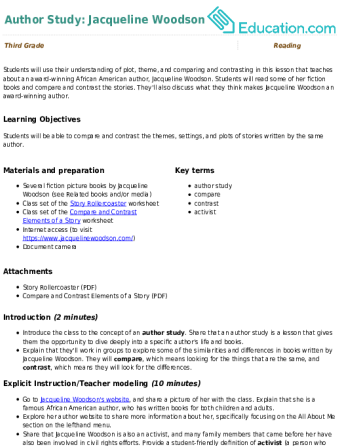
Students will use their understanding of plot, theme, and comparing and contrasting in this lesson that teaches about an award-winning African American author, Jacqueline Woodson. Students will read some of her fiction books and compare and contrast the stories. They'll also discuss what they think makes Jacqueline Woodson an award-winning author.
Lesson Plan
Author Study: Jacqueline Woodson
Lesson Plan
Author Study: Jacqueline Woodson
Students will use their understanding of plot, theme, and comparing and contrasting in this lesson that teaches about an award-winning African American author, Jacqueline Woodson. Students will read some of her fiction books and compare and contrast the stories. They'll also discuss what they think makes Jacqueline Woodson an award-winning author.
Third Grade
Reading
Lesson Plan
Third Grade Daily Sub Plan B
Lesson Plan
Third Grade Daily Sub Plan B
Third Grade
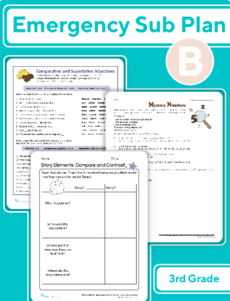
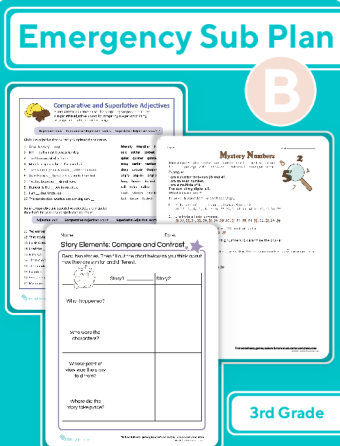
Set your classroom up for success with this daily sub plan featuring lessons, worksheets, and activities! This resource is a great way to prepare for a substitute in your classroom. Your substitute can keep your third graders learning in your absence by using this packet of material. This teaching resource highlights fiction comprehension, creative writing, social studies skills, and math challenges.
Lesson Plan
Third Grade Daily Sub Plan B
Lesson Plan
Third Grade Daily Sub Plan B
Set your classroom up for success with this daily sub plan featuring lessons, worksheets, and activities! This resource is a great way to prepare for a substitute in your classroom. Your substitute can keep your third graders learning in your absence by using this packet of material. This teaching resource highlights fiction comprehension, creative writing, social studies skills, and math challenges.
Third Grade
Lesson Plan
EL
Asking Deeper Questions
Lesson Plan
Asking Deeper Questions
Third Grade
Use this lesson to help your ELs ask different types of questions as they read. Students will analyze a story and ask questions based on the text. This lesson could be used on its own or used as support to the Red Light, Green Light lesson.
Lesson Plan
EL
Asking Deeper Questions
Lesson Plan
Asking Deeper Questions
Use this lesson to help your ELs ask different types of questions as they read. Students will analyze a story and ask questions based on the text. This lesson could be used on its own or used as support to the Red Light, Green Light lesson.
Third Grade
Lesson Plan
Determining Importance
Lesson Plan
Determining Importance
Third Grade
Is that fact important, or is it just interesting? Use this lesson to help your students determine importance in nonfiction text.
Lesson Plan
Determining Importance
Lesson Plan
Determining Importance
Is that fact important, or is it just interesting? Use this lesson to help your students determine importance in nonfiction text.
Third Grade
Lesson Plan
Story Structure Rollercoaster
Lesson Plan
Story Structure Rollercoaster
Third Grade
Reading
Reading can be a rollercoaster with its ups and downs! Use this lesson that features a rollercoaster-themed story map to teach your students about story structure and how to use a graphic organizer to visualize it.
Lesson Plan
Story Structure Rollercoaster
Lesson Plan
Story Structure Rollercoaster
Reading can be a rollercoaster with its ups and downs! Use this lesson that features a rollercoaster-themed story map to teach your students about story structure and how to use a graphic organizer to visualize it.
Third Grade
Reading
Lesson Plan
EL
Parts of a Drama
Lesson Plan
Parts of a Drama
Third Grade
Writing
Expose your students to the wonderful genre of drama, but be sure to teach them the important key terms so they understand the structure. Use this as a stand alone lesson or a pre-lesson for the
Putting a Play Together!
lesson.
Lesson Plan
EL
Parts of a Drama
Lesson Plan
Parts of a Drama
Expose your students to the wonderful genre of drama, but be sure to teach them the important key terms so they understand the structure. Use this as a stand alone lesson or a pre-lesson for the
Putting a Play Together!
lesson.
Third Grade
Writing
Lesson Plan
Elements of a Story
Lesson Plan
Elements of a Story
Third Grade
In this interactive lesson, your students will learn to identify four elements of a fictional story: characters, setting, problem, and solution.
Lesson Plan
Elements of a Story
Lesson Plan
Elements of a Story
In this interactive lesson, your students will learn to identify four elements of a fictional story: characters, setting, problem, and solution.
Third Grade
Lesson Plan
EL
A Simple Summary
Lesson Plan
A Simple Summary
Third Grade
Use this lesson to help your ELs learn how to create a simple summary, paying attention to the sequence in a story. This lesson can stand alone or be used as a pre-lesson for the
Simple Summaries
lesson.
Lesson Plan
EL
A Simple Summary
Lesson Plan
A Simple Summary
Use this lesson to help your ELs learn how to create a simple summary, paying attention to the sequence in a story. This lesson can stand alone or be used as a pre-lesson for the
Simple Summaries
lesson.
Third Grade
Lesson Plan
Sequencing the Order of Events
Lesson Plan
Sequencing the Order of Events
Third Grade
The sequence of events help readers recount the most important parts of the story in order. Use this lesson with your students to read fables and a classic picture book as you practice recounting the sequence of events.
Lesson Plan
Sequencing the Order of Events
Lesson Plan
Sequencing the Order of Events
The sequence of events help readers recount the most important parts of the story in order. Use this lesson with your students to read fables and a classic picture book as you practice recounting the sequence of events.
Third Grade
Lesson Plan
Fact or Opinion: Part 2
Lesson Plan
Fact or Opinion: Part 2
Second Grade
My dog is better! In this lesson, your students will combine reading, writing, and movement to practice distinguishing and supporting facts and opinions.
Lesson Plan
Fact or Opinion: Part 2
Lesson Plan
Fact or Opinion: Part 2
My dog is better! In this lesson, your students will combine reading, writing, and movement to practice distinguishing and supporting facts and opinions.
Second Grade
Lesson Plan
EL
Close Reading Strategy
Lesson Plan
Close Reading Strategy
Third Grade
Grammar and Mechanics
This lesson teaches your students to pay attention to small words, such as adjectives, adverbs, and verbs, to make a big difference in reading comprehension! Use as a stand-alone lesson or as a pre-lesson for
Close Reading: Introduction
.
Lesson Plan
EL
Close Reading Strategy
Lesson Plan
Close Reading Strategy
This lesson teaches your students to pay attention to small words, such as adjectives, adverbs, and verbs, to make a big difference in reading comprehension! Use as a stand-alone lesson or as a pre-lesson for
Close Reading: Introduction
.
Third Grade
Grammar and Mechanics
Lesson Plan
Fact or Opinion: Part 1
Lesson Plan
Fact or Opinion: Part 1
Second Grade
Reading
Cats are the best! Pizza is better! My teacher rules! In Fact or Opinion: Part 1, your students will combine reading and writing to learn about the differences between facts and opinions and how those differences are communicated.
Lesson Plan
Fact or Opinion: Part 1
Lesson Plan
Fact or Opinion: Part 1
Cats are the best! Pizza is better! My teacher rules! In Fact or Opinion: Part 1, your students will combine reading and writing to learn about the differences between facts and opinions and how those differences are communicated.
Second Grade
Reading
Lesson Plan
Simple Summaries
Lesson Plan
Simple Summaries
Third Grade
Reading
Keep it simple! Teach your students to write a summary using the Somebody-Wanted-But-So-Then frame for analyzing a story.
Lesson Plan
Simple Summaries
Lesson Plan
Simple Summaries
Keep it simple! Teach your students to write a summary using the Somebody-Wanted-But-So-Then frame for analyzing a story.
Third Grade
Reading
Lesson Plan
EL
Focus on the Differences
Lesson Plan
Focus on the Differences
Third Grade
Reading
Use this lesson with your students to teach them to describe the differences between stories with contrasting conjunctions. This lesson can stand-alone or be used as a pre-lesson for the
Finding Similarities and Differences
lesson.
Lesson Plan
EL
Focus on the Differences
Lesson Plan
Focus on the Differences
Use this lesson with your students to teach them to describe the differences between stories with contrasting conjunctions. This lesson can stand-alone or be used as a pre-lesson for the
Finding Similarities and Differences
lesson.
Third Grade
Reading
Lesson Plan
EL
Signal Cause and Effect
Lesson Plan
Signal Cause and Effect
Third Grade
Teach your students to recognize the words that signal cause and effect relationships. This lesson can stand alone or be used as a pre-lesson for the
Nonfiction Comprehension: Cause and Effect
lesson.
Lesson Plan
EL
Signal Cause and Effect
Lesson Plan
Signal Cause and Effect
Teach your students to recognize the words that signal cause and effect relationships. This lesson can stand alone or be used as a pre-lesson for the
Nonfiction Comprehension: Cause and Effect
lesson.
Third Grade
Lesson Plan
Reading Comprehension and Evidence-Based Terms
Lesson Plan
Reading Comprehension and Evidence-Based Terms
Third Grade
Vocabulary
The proof is in the pudding! Use this lesson to teach your students how to use text evidence as proof when answering questions after reading. They will use evidence-based terms as they answer basic comprehension questions.
Lesson Plan
Reading Comprehension and Evidence-Based Terms
Lesson Plan
Reading Comprehension and Evidence-Based Terms
The proof is in the pudding! Use this lesson to teach your students how to use text evidence as proof when answering questions after reading. They will use evidence-based terms as they answer basic comprehension questions.
Third Grade
Vocabulary
Lesson Plan
Comparing Texts by the Same Author
Lesson Plan
Comparing Texts by the Same Author
Third Grade
Reading
Getting hooked on a series or type of character creates reader engagement! Use this lesson to challenge your students to compare and contrast fictional texts as they find the joy in reading books by the same author.
Lesson Plan
Comparing Texts by the Same Author
Lesson Plan
Comparing Texts by the Same Author
Getting hooked on a series or type of character creates reader engagement! Use this lesson to challenge your students to compare and contrast fictional texts as they find the joy in reading books by the same author.
Third Grade
Reading
Lesson Plan
EL
Exploring Sequence with Signal Words
Lesson Plan
Exploring Sequence with Signal Words
Third Grade
Use this lesson to teach your students how to retell the beginning, middle, and end of a story using sequencing words and phrases. This lesson can stand alone or be used as a pre-lesson for the
Story Structure Rollercoaster
lesson.
Lesson Plan
EL
Exploring Sequence with Signal Words
Lesson Plan
Exploring Sequence with Signal Words
Use this lesson to teach your students how to retell the beginning, middle, and end of a story using sequencing words and phrases. This lesson can stand alone or be used as a pre-lesson for the
Story Structure Rollercoaster
lesson.
Third Grade
Lesson Plan
Red Light, Green Light Questions
Lesson Plan
Red Light, Green Light Questions
Third Grade
Statistics
Teach your students to ask and differentiate between recall questions and inferential questions. This lesson will help build a classroom culture around asking deep, inferential questions.
Lesson Plan
Red Light, Green Light Questions
Lesson Plan
Red Light, Green Light Questions
Teach your students to ask and differentiate between recall questions and inferential questions. This lesson will help build a classroom culture around asking deep, inferential questions.
Third Grade
Statistics
Lesson Plan
1