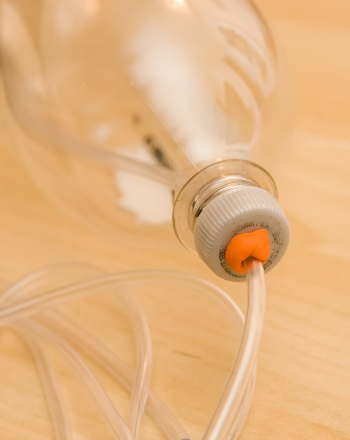
Can your child make his own device to measure differences in the weather? Believe it or not—he can! This homemade barometer allows your little scientist to contemplate and compare different air and weather conditions. The building process will boost his motor skills, but you'll also notice a difference in his observational skills—an important expertise for future scientific endeavors.
What You Need:
- Scissors
- Balloon
- Soda bottle
- A rubber band
- Two straws
- A toothpick
- A ruler
- A marker
- Paper and a pen
- Tape
- Location with fairly constant temperature to leave barometer
What You Do:
- Have him cut the neck off the balloon. He can secure the top tightly to the opening of the pop bottle with a rubber band. (If you find that the barometer doesn’t work, try strengthening the seal by pulling the balloon tighter.)
- Ask him to tape the two straws together in order to make one long straw.
- Tape the toothpick to one end of the long straw so that the toothpick can work as a pointer. Tape the other end of the long straw to the center of the balloon. The straw should stick out about 6 inches from the bottle.
- Help him make a measurement chart for recording his observations. Line up the bottom of a ruler with a piece of paper and mark quarter-inch increments from the bottom of the paper to the top. Label each increment: 1, 1-1⁄4, 1-1⁄2, 1-3⁄4, 2, and so forth.
- Invite him to tape the completed measurement chart to the wall behind the barometer. Position the barometer and the chart, so that the toothpick points to a number near the middle of the chart.
- Instruct him to set up the chart by recording the date, what the weather is like, and the number that the toothpick points to.
- Remind him to record his barometer readings every day (especially when there’s a change in the weather). Does he notice a pattern?
What’s Going On?
When the toothpick points at high numbers, air pressure is pushing down on the balloon. When the toothpick points at lower numbers, there is little air pressure pushing on the balloon. He should discover a connection between your barometer’s readings and the weather. On sunny, clear days, the reading should be high. High pressure (as weather people call it) means the atmosphere is thicker over your area, and that usually means good weather. On stormy days, the reading should be lower because there is usually low pressure when it rains.
By Lynn Brunelle
Adapted from "Pop Bottle Science" by Lynn Brunelle. (Workman, New York, Copyright 2004).
Add your own comment