SKIP TO CONTENT
Worksheet Generator
Subjects
Grades
Worksheets
Games
Build a Worksheet
More Resources
Roly Recommends
Subjects
Grades
Worksheets
Games
Build a Worksheet
More Resources
Roly Recommends
Filters
Search for: characters, setting...
✕
Lesson Plans
✕
4th Grade
✕
Common Core
✕
Subjects
Math
English Language Arts
Grade Level
Pre-K
K
1st
2nd
3rd
4th
5th
6th
7th
8th
Early Childhood
Elementary School
Middle School
Resource Type
Worksheets
Games
Lesson Plans
Interactive Worksheets
Activities
Common Core
Yes
Roly Recommends
Social Emotional Learning
English Language Support
Yes
See More
Clear All
View 66 results
Showing Results for characters setting... : Page 2
66 results
Search for: characters, setting...
✕
Lesson Plans
✕
4th Grade
✕
Common Core
✕
Clear All
Sort by:
Relevance
Most recent
Most popular
Alphabetical A-Z
Alphabetical Z-A
All filters
66 results
Sort by:
Relevance
Most recent
Most popular
Alphabetical A-Z
Alphabetical Z-A
Making Strong Inferences
Lesson Plan
Making Strong Inferences
Fourth Grade
Making inferences is a key skill to master before going on to read more difficult fictional texts in fifth grade. This lesson helps your students solidify their inference skills with a focus on citing evidence in fictional text.
Lesson Plan
Making Strong Inferences
Lesson Plan
Making Strong Inferences
Making inferences is a key skill to master before going on to read more difficult fictional texts in fifth grade. This lesson helps your students solidify their inference skills with a focus on citing evidence in fictional text.
Fourth Grade
Lesson Plan
Polishing Your Written Work
Lesson Plan
Polishing Your Written Work
Fourth Grade
Whether students are revising handwritten drafts or work that has been composed on the computer, this lesson will help your writers understand some basic strategies and copyediting symbols for polishing their writing.
Lesson Plan
Polishing Your Written Work
Lesson Plan
Polishing Your Written Work
Whether students are revising handwritten drafts or work that has been composed on the computer, this lesson will help your writers understand some basic strategies and copyediting symbols for polishing their writing.
Fourth Grade
Lesson Plan
Fiction vs. Nonfiction
Lesson Plan
Fiction vs. Nonfiction
Fourth Grade
Reading
Kids will love learning some fun facts about elephants while developing their reading comprehension skills. Using T-charts and Venn diagrams, they'll analyze stories and explore different characteristics of fiction and nonfiction.
Lesson Plan
Fiction vs. Nonfiction
Lesson Plan
Fiction vs. Nonfiction
Kids will love learning some fun facts about elephants while developing their reading comprehension skills. Using T-charts and Venn diagrams, they'll analyze stories and explore different characteristics of fiction and nonfiction.
Fourth Grade
Reading
Lesson Plan
Terrific Titles
Lesson Plan
Terrific Titles
Fourth Grade
Crafting a grabby title and headings is an important skill. A title is the first thing a reader sees, and frames the rest of the piece. In this lesson, students will learn strategies to create and correctly capitalize grabby titles.
Lesson Plan
Terrific Titles
Lesson Plan
Terrific Titles
Crafting a grabby title and headings is an important skill. A title is the first thing a reader sees, and frames the rest of the piece. In this lesson, students will learn strategies to create and correctly capitalize grabby titles.
Fourth Grade
Lesson Plan
Inference Detectives
Lesson Plan
Inference Detectives
Fourth Grade
Vocabulary
It’s time to make an educated guess! In this lesson, your students will practice using their background knowledge and evidence from the text to make inferences in nonfiction pieces about Martin Luther King, Jr., and Cesar Chavez.
Lesson Plan
Inference Detectives
Lesson Plan
Inference Detectives
It’s time to make an educated guess! In this lesson, your students will practice using their background knowledge and evidence from the text to make inferences in nonfiction pieces about Martin Luther King, Jr., and Cesar Chavez.
Fourth Grade
Vocabulary
Lesson Plan
Researching the Past Using Primary Sources
Lesson Plan
Researching the Past Using Primary Sources
Fourth Grade
Reading
Knock, knock! It’s the U.S. Census Bureau! In this lesson plan, students analyze primary sources in the form of census data to do research that helps them answer questions about famous people and the time period during which they lived.
Lesson Plan
Researching the Past Using Primary Sources
Lesson Plan
Researching the Past Using Primary Sources
Knock, knock! It’s the U.S. Census Bureau! In this lesson plan, students analyze primary sources in the form of census data to do research that helps them answer questions about famous people and the time period during which they lived.
Fourth Grade
Reading
Lesson Plan
Perseverance to Achieve Goals
Lesson Plan
Perseverance to Achieve Goals
Fourth Grade
Motivation, perseverance, and grit are all key in learning and in the classroom! In this lesson, students will explore the term "perseverance" and research ways they can stay motivated in school and in their lives.
Lesson Plan
Perseverance to Achieve Goals
Lesson Plan
Perseverance to Achieve Goals
Motivation, perseverance, and grit are all key in learning and in the classroom! In this lesson, students will explore the term "perseverance" and research ways they can stay motivated in school and in their lives.
Fourth Grade
Lesson Plan
Cause and Effect: The Montgomery Bus Boycott
Lesson Plan
Cause and Effect: The Montgomery Bus Boycott
Fourth Grade
Reading
Your students may know about Rosa Parks, but do they know about the Montgomery Bus Boycott that her famous action inspired? Enhance students' knowledge of this important part of the Civil Rights movement while teaching cause and effect.
Lesson Plan
Cause and Effect: The Montgomery Bus Boycott
Lesson Plan
Cause and Effect: The Montgomery Bus Boycott
Your students may know about Rosa Parks, but do they know about the Montgomery Bus Boycott that her famous action inspired? Enhance students' knowledge of this important part of the Civil Rights movement while teaching cause and effect.
Fourth Grade
Reading
Lesson Plan
Who Said It?
Lesson Plan
Who Said It?
Fourth Grade
Writing
Students will have a blast creating their own cartoons and comics. This lesson provides an engaging method to help students demonstrate the use of quotation marks when writing.
Lesson Plan
Who Said It?
Lesson Plan
Who Said It?
Students will have a blast creating their own cartoons and comics. This lesson provides an engaging method to help students demonstrate the use of quotation marks when writing.
Fourth Grade
Writing
Lesson Plan
It’s All in the Personality: Character Traits
Lesson Plan
It’s All in the Personality: Character Traits
Third Grade
Reading
In this lesson, students will use their creativity, a graphic organizer, and a fun story to learn about character analysis.
Lesson Plan
It’s All in the Personality: Character Traits
Lesson Plan
It’s All in the Personality: Character Traits
In this lesson, students will use their creativity, a graphic organizer, and a fun story to learn about character analysis.
Third Grade
Reading
Lesson Plan
Whose Point Is It Anyway?
Lesson Plan
Whose Point Is It Anyway?
Fourth Grade
Writing
What if Cinderella’s stepsisters weren’t really evil? In this engaging lesson, you will introduce your students to multiple points of view and discuss how these different perspectives can change a reader’s experience.
Lesson Plan
Whose Point Is It Anyway?
Lesson Plan
Whose Point Is It Anyway?
What if Cinderella’s stepsisters weren’t really evil? In this engaging lesson, you will introduce your students to multiple points of view and discuss how these different perspectives can change a reader’s experience.
Fourth Grade
Writing
Lesson Plan
Head to Head Fiction Reflections
Lesson Plan
Head to Head Fiction Reflections
Fourth Grade
Reading reflection topics like theme, problems, and solutions can be challenging concepts for young readers. Help your students make sense of these literary elements using dynamic organizers that draw comparisons between fiction texts.
Lesson Plan
Head to Head Fiction Reflections
Lesson Plan
Head to Head Fiction Reflections
Reading reflection topics like theme, problems, and solutions can be challenging concepts for young readers. Help your students make sense of these literary elements using dynamic organizers that draw comparisons between fiction texts.
Fourth Grade
Lesson Plan
Writing: Show, Don’t Tell
Lesson Plan
Writing: Show, Don’t Tell
Third Grade
Writing
Help students learn about descriptive writing with this engaging lesson. Your class will learn to show character emotions though the “show, don’t tell” writing technique with videos, practice writing, and class participation.
Lesson Plan
Writing: Show, Don’t Tell
Lesson Plan
Writing: Show, Don’t Tell
Help students learn about descriptive writing with this engaging lesson. Your class will learn to show character emotions though the “show, don’t tell” writing technique with videos, practice writing, and class participation.
Third Grade
Writing
Lesson Plan
Conversations About Chronology
Lesson Plan
Conversations About Chronology
Fourth Grade
Have students justify their thought process in this lesson about order of events. This lesson is a great way to start discussing the importance of understanding causal relationships to fully understand chronology in fictional texts.
Lesson Plan
Conversations About Chronology
Lesson Plan
Conversations About Chronology
Have students justify their thought process in this lesson about order of events. This lesson is a great way to start discussing the importance of understanding causal relationships to fully understand chronology in fictional texts.
Fourth Grade
Lesson Plan
Author's Purpose: Easy as PIE
Lesson Plan
Author's Purpose: Easy as PIE
Fourth Grade
Reading
Give your class the "write" tools they need to become excellent authors. In this literary lesson, students use their knowledge of author's purpose to successfully write pieces that persuade, inform, and entertain.
Lesson Plan
Author's Purpose: Easy as PIE
Lesson Plan
Author's Purpose: Easy as PIE
Give your class the "write" tools they need to become excellent authors. In this literary lesson, students use their knowledge of author's purpose to successfully write pieces that persuade, inform, and entertain.
Fourth Grade
Reading
Lesson Plan
Literary Argument: Drafting Your Essay
Lesson Plan
Literary Argument: Drafting Your Essay
Fourth Grade
Writing
Once students have selected a topic related to a piece of literature they have read and mapped out their argument, this lesson will help them turn their prewriting into an essay.
Lesson Plan
Literary Argument: Drafting Your Essay
Lesson Plan
Literary Argument: Drafting Your Essay
Once students have selected a topic related to a piece of literature they have read and mapped out their argument, this lesson will help them turn their prewriting into an essay.
Fourth Grade
Writing
Lesson Plan
There’s No I in Theme-work!
Lesson Plan
There’s No I in Theme-work!
Fourth Grade
Vocabulary
That’s right! The theme applies to everyone! Use this interactive lesson to teach your students how to find the theme of a fictional text.
Lesson Plan
There’s No I in Theme-work!
Lesson Plan
There’s No I in Theme-work!
That’s right! The theme applies to everyone! Use this interactive lesson to teach your students how to find the theme of a fictional text.
Fourth Grade
Vocabulary
Lesson Plan
Using Articles: A, An, The
Lesson Plan
Using Articles: A, An, The
Fourth Grade
Articles are a simple yet critical part of speech. This lesson helps your fourth graders distinguish the three articles and understand how to use them correctly in sentences.
Lesson Plan
Using Articles: A, An, The
Lesson Plan
Using Articles: A, An, The
Articles are a simple yet critical part of speech. This lesson helps your fourth graders distinguish the three articles and understand how to use them correctly in sentences.
Fourth Grade
Lesson Plan
Reading Response Letters
Lesson Plan
Reading Response Letters
Fourth Grade
Grammar and Mechanics
How can you
see
what your students are thinking while they read? Try reading response letters in your class. Students will practice formatting letters and learn to discuss their thinking about literature in writing.
Lesson Plan
Reading Response Letters
Lesson Plan
Reading Response Letters
How can you
see
what your students are thinking while they read? Try reading response letters in your class. Students will practice formatting letters and learn to discuss their thinking about literature in writing.
Fourth Grade
Grammar and Mechanics
Lesson Plan
Giving Gifts: All About Decimals
Lesson Plan
Giving Gifts: All About Decimals
Fourth Grade
Teach your students about keeping on budget with this fun holiday-based lesson. Students will add decimals in a real-life application as they choose gifts for friends and family without breaking the bank.
Lesson Plan
Giving Gifts: All About Decimals
Lesson Plan
Giving Gifts: All About Decimals
Teach your students about keeping on budget with this fun holiday-based lesson. Students will add decimals in a real-life application as they choose gifts for friends and family without breaking the bank.
Fourth Grade
Lesson Plan
Pop Rocks Matter
Lesson Plan
Pop Rocks Matter
Fourth Grade
Writing
This experiment is a fun lesson that captures the ears, eyes, and minds of students! It combines writing, reasoning, predictions, and teamwork with candies and soda to produce a memorable lesson on chemical reactions and energy.
Lesson Plan
Pop Rocks Matter
Lesson Plan
Pop Rocks Matter
This experiment is a fun lesson that captures the ears, eyes, and minds of students! It combines writing, reasoning, predictions, and teamwork with candies and soda to produce a memorable lesson on chemical reactions and energy.
Fourth Grade
Writing
Lesson Plan
EL
Making Text Connections
Lesson Plan
Making Text Connections
Fourth Grade
This lesson helps your students practice making text connections so they can write about their reading. It can be taught on its own or serve as a precursor to the Reading Response Letters lesson.
Lesson Plan
EL
Making Text Connections
Lesson Plan
Making Text Connections
This lesson helps your students practice making text connections so they can write about their reading. It can be taught on its own or serve as a precursor to the Reading Response Letters lesson.
Fourth Grade
Lesson Plan
EL
Vocabulary in Context
Lesson Plan
Vocabulary in Context
Fourth Grade
In this lesson, students will improve their skills in using context clues to determine the meaning of difficult words. Use it as a stand-alone lesson or as support to the lesson Journey on the Underground Railroad.
Lesson Plan
EL
Vocabulary in Context
Lesson Plan
Vocabulary in Context
In this lesson, students will improve their skills in using context clues to determine the meaning of difficult words. Use it as a stand-alone lesson or as support to the lesson Journey on the Underground Railroad.
Fourth Grade
Lesson Plan
Numbers All A-Round
Lesson Plan
Numbers All A-Round
Fourth Grade
Teach your students to round to the hundred thousands place with this straightforward lesson.
Lesson Plan
Numbers All A-Round
Lesson Plan
Numbers All A-Round
Teach your students to round to the hundred thousands place with this straightforward lesson.
Fourth Grade
Lesson Plan
Fraction of a Whole
Lesson Plan
Fraction of a Whole
Fourth Grade
Teach your students to use bar models and multiplication to find a fraction of a whole number.
Lesson Plan
Fraction of a Whole
Lesson Plan
Fraction of a Whole
Teach your students to use bar models and multiplication to find a fraction of a whole number.
Fourth Grade
Lesson Plan
EL
Multiples and Skip Counting
Lesson Plan
Multiples and Skip Counting
Fourth Grade
Help your students understand the connection between skip counting, multiples, and multiplication with this lesson. Teach it on its own or use it as support to the lesson Clap Counting with Multiples.
Lesson Plan
EL
Multiples and Skip Counting
Lesson Plan
Multiples and Skip Counting
Help your students understand the connection between skip counting, multiples, and multiplication with this lesson. Teach it on its own or use it as support to the lesson Clap Counting with Multiples.
Fourth Grade
Lesson Plan
Fluently Subtracting within 1000
Lesson Plan
Fluently Subtracting within 1000
Third Grade
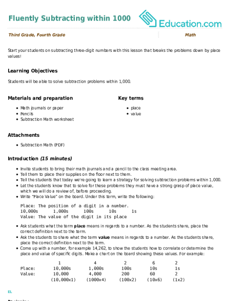
Start your students on subtracting three-digit numbers with this lesson that breaks the problems down by place values!
Lesson Plan
Fluently Subtracting within 1000
Lesson Plan
Fluently Subtracting within 1000
Start your students on subtracting three-digit numbers with this lesson that breaks the problems down by place values!
Third Grade
Lesson Plan
EL
Text Features and Their Purposes
Lesson Plan
Text Features and Their Purposes
Fourth Grade
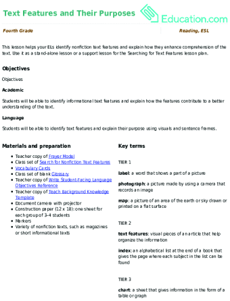
This lesson helps your ELs identify nonfiction text features and explain how they enhance comprehension of the text. Use it as a stand-alone lesson or a support lesson for the Searching for Text Features lesson plan.
Lesson Plan
EL
Text Features and Their Purposes
Lesson Plan
Text Features and Their Purposes
This lesson helps your ELs identify nonfiction text features and explain how they enhance comprehension of the text. Use it as a stand-alone lesson or a support lesson for the Searching for Text Features lesson plan.
Fourth Grade
Lesson Plan
Parking Lot Multiplication
Lesson Plan
Parking Lot Multiplication
Third Grade
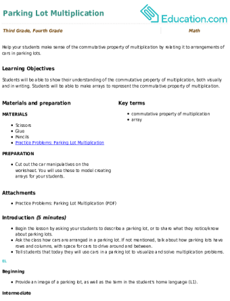
Help your students make sense of the commutative property of multiplication by relating it to arrangements of cars in parking lots.
Lesson Plan
Parking Lot Multiplication
Lesson Plan
Parking Lot Multiplication
Help your students make sense of the commutative property of multiplication by relating it to arrangements of cars in parking lots.
Third Grade
Lesson Plan
EL
Explaining Illustrations with Declarative Sentences
Lesson Plan
Explaining Illustrations with Declarative Sentences
Fourth Grade
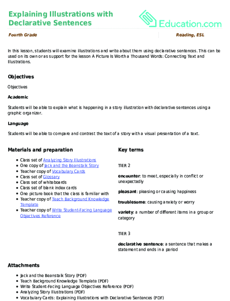
In this lesson, students will examine illustrations and write about them using declarative sentences. This can be used on its own or as support for the lesson A Picture Is Worth a Thousand Words: Connecting Text and Illustrations.
Lesson Plan
EL
Explaining Illustrations with Declarative Sentences
Lesson Plan
Explaining Illustrations with Declarative Sentences
In this lesson, students will examine illustrations and write about them using declarative sentences. This can be used on its own or as support for the lesson A Picture Is Worth a Thousand Words: Connecting Text and Illustrations.
Fourth Grade
Lesson Plan
1
2
3